Posts

Whirlpool Galaxy: Messier 51
Image
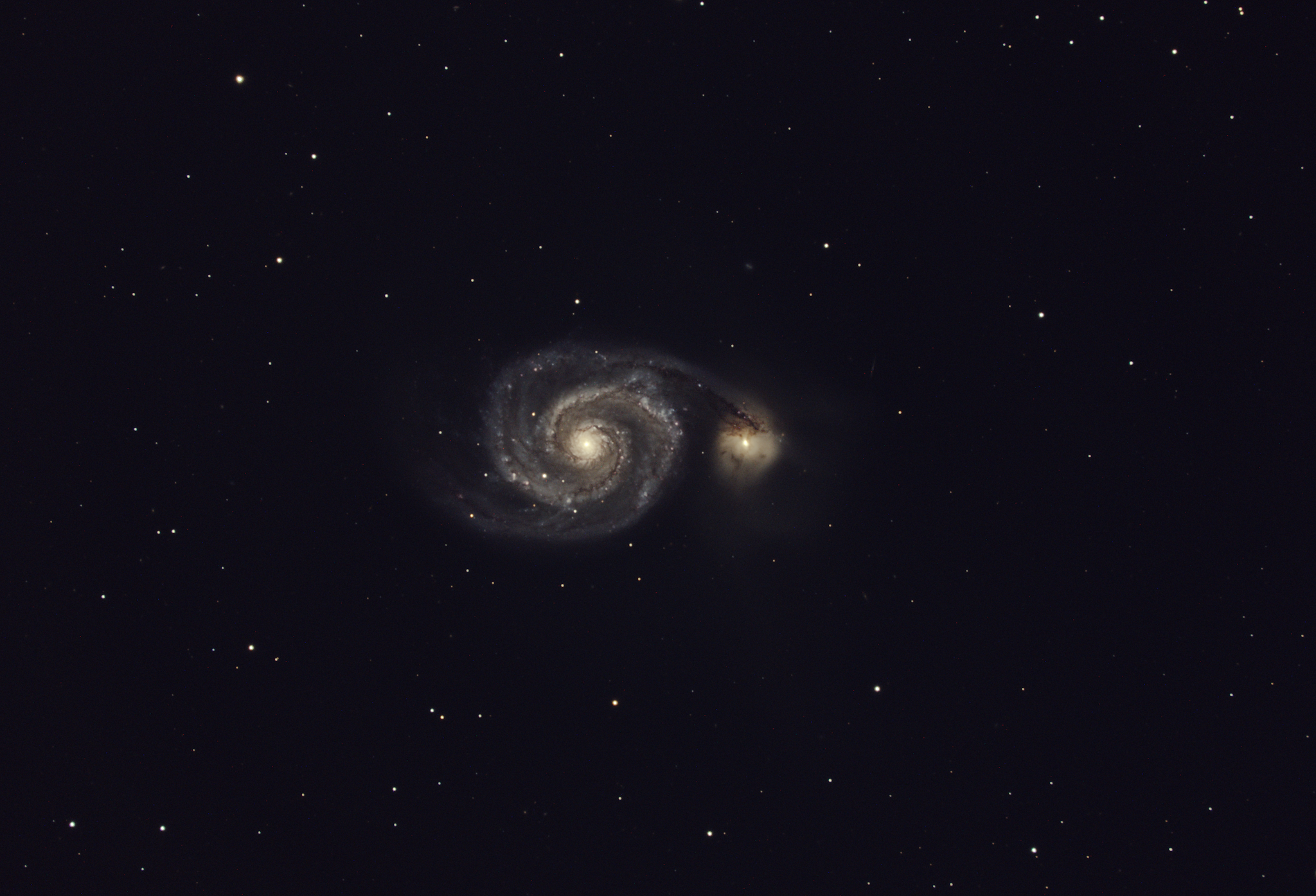
Messier 51: Whirlpool Galaxy M51a (left) and M51b (right) At 31 million light-years away, Messier 51 is actually two interacting galaxies. In this photo, M51a (the Whirlpool) is the larger spiral galaxy. The smaller companion, M51b, is classified as a dwarf galaxy and is seen at the end of one of the spiral arms of M51a. Before Copernicus and Galileo, people believed that Earth was the center of existence. The sun, the stars and planets revolved around us. After all, that is exactly how it appeared to be (with the exception of a few 'wanderer' planets and occasional passing of comets). With the advent of advanced mathematics and the birth of the telescope, humans made discoveries that led to many realizations; that Earth is not the center of our solar system. The Sun is not the center of our galaxy. Before we were aware of galaxies other than our own, the...
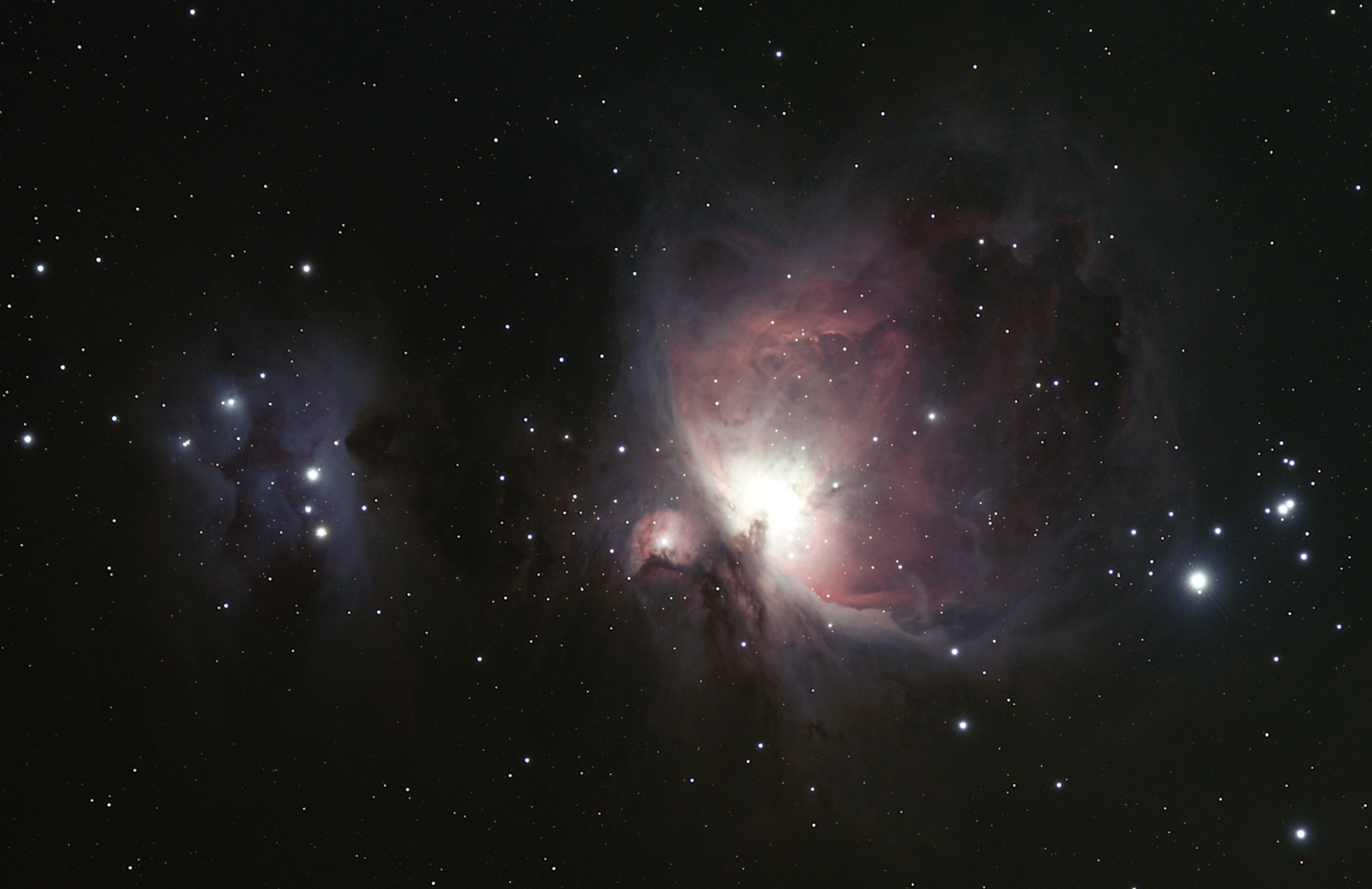
The Great Orion Nebula: M42

Image
The Great Orion Nebula (Messier 42)   Located below Orion's belt in the constellation of Orion, the Great Orion Nebula is the brightest nebula visible in the night sky.  Even under light polluted skies, M42 can be seen with only a modest set of Binoculars (try it out if you haven't yet). The Orion constellation: 1/11/2021 at 10:45PM EST from SE MI The Constellation of Orion can be found during the winter months by looking south. As of today, January 11th, it will be visible in the south-east after sunset, reach its highest directly south at 11pm, and begin to set in the West just past 2:30am (for those of you in or near Michigan). I usually look for the 3 stars in a line that make up Orion's belt along with the two much brighter stars Betelgeuse (above the belt) and Rigel (below the belt). ...

The Pleiades: Messier 45

Image
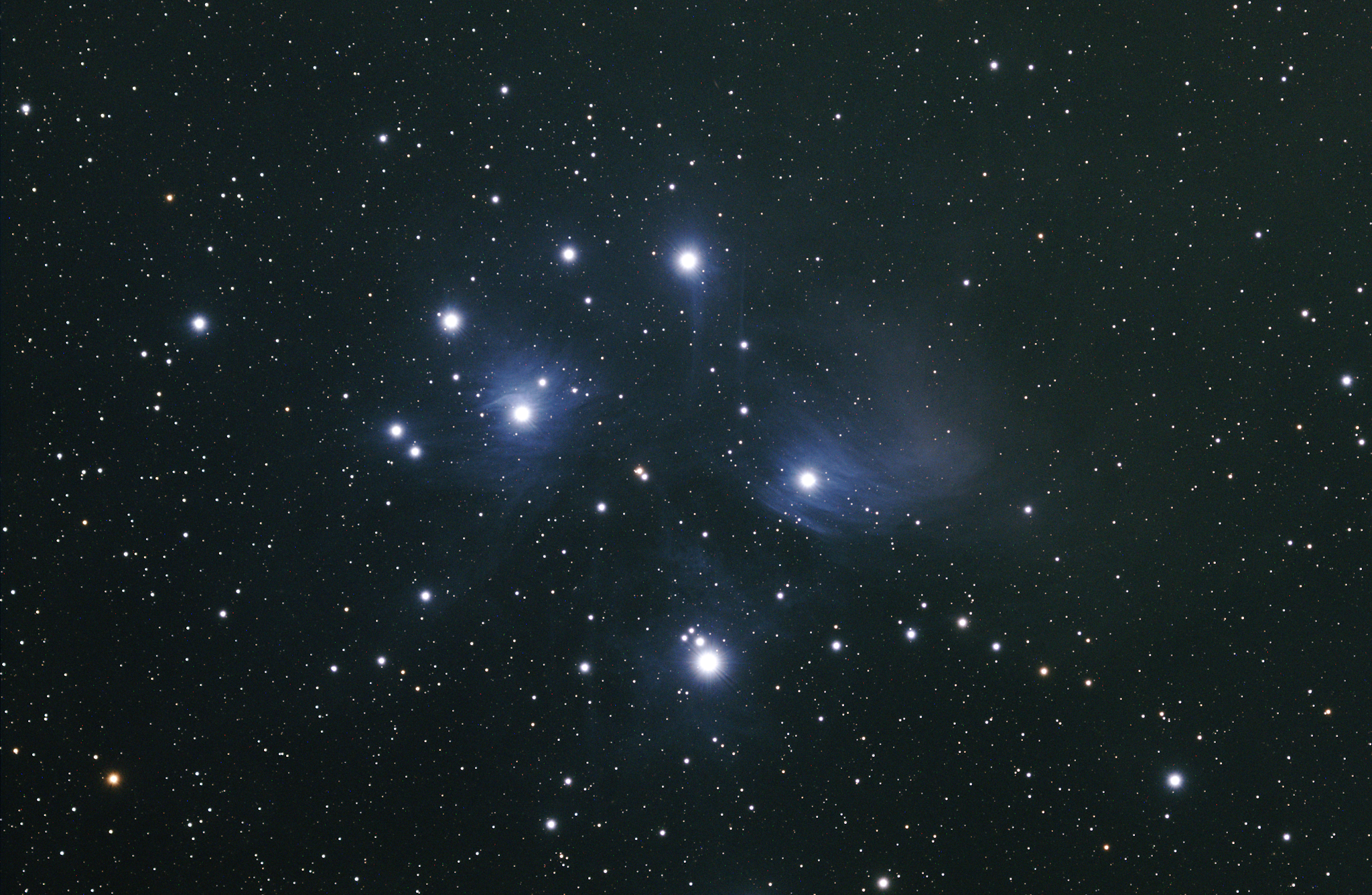
Type: Open star cluster Age: ~100 million years Distance: 444 ly Also Known As: The Seven Sisters Michigan has been very cloudy over the past few months and I haven’t had many opportunities to be out imaging. I was however able to record some data on the Pleiades star cluster. I did not capture as much time on this target as I normally would like but I think it turned out good considering the constant parade of clouds lately. M45 is one of the closest star clusters to Earth and is easy to spot in the night sky. To me, this is easy to spot even from my light polluted back yard as it looks like a smudge in the sky. Pointing binoculars or a scope at it reveals the blueish stars that form the Pleiades. There is some blueish cloudiness to this cluster (reflection nebula) that was initially thought to be dust left over from the formation of the stars, but it is now believed to be an unrelated dust cloud in the interstellar medium; dust in between the star cluster and Earth that is sc...

The Moon

Image
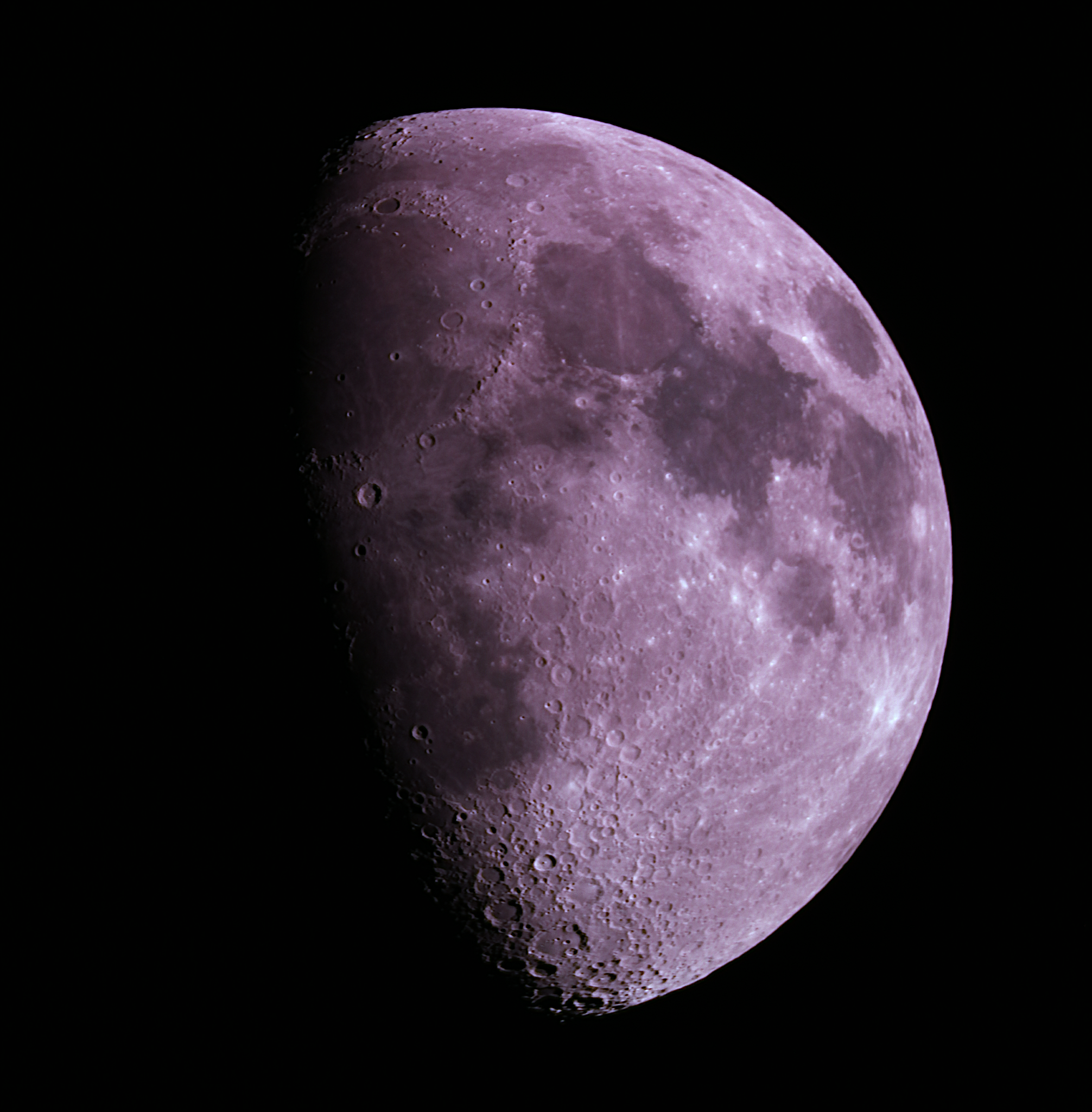
NASA made a big announcement today, that they have confirmed the existence of water on the surface of the Moon. This was confirmed using SOFIA , or the Stratospheric Observatory for Infrared Astronomy. SOFIA is literally a telescope that rides in a plane that flies the very upper part of Earth's atmosphere while recording data. Nobody is claiming that there are any lakes or streams of water, but instead that the water is possibly trapped by glass. When micrometeorites end up striking the moon's surface, it is common that the impact turns some of the lunar material into glass. It is being proposed that the water may be trapped under (or in) this glass, which could be why the water has not sublimated (turning from ice to gas) when the sun's rays are cast on the moon. (This is by no means the only explanation and could turn out to be wrong). It may not sound like a huge breakthrough, but this really is an excellent clue that helps to better understand the formation of the Eart...

The Dumbbell Nebula: Messier 27

Image
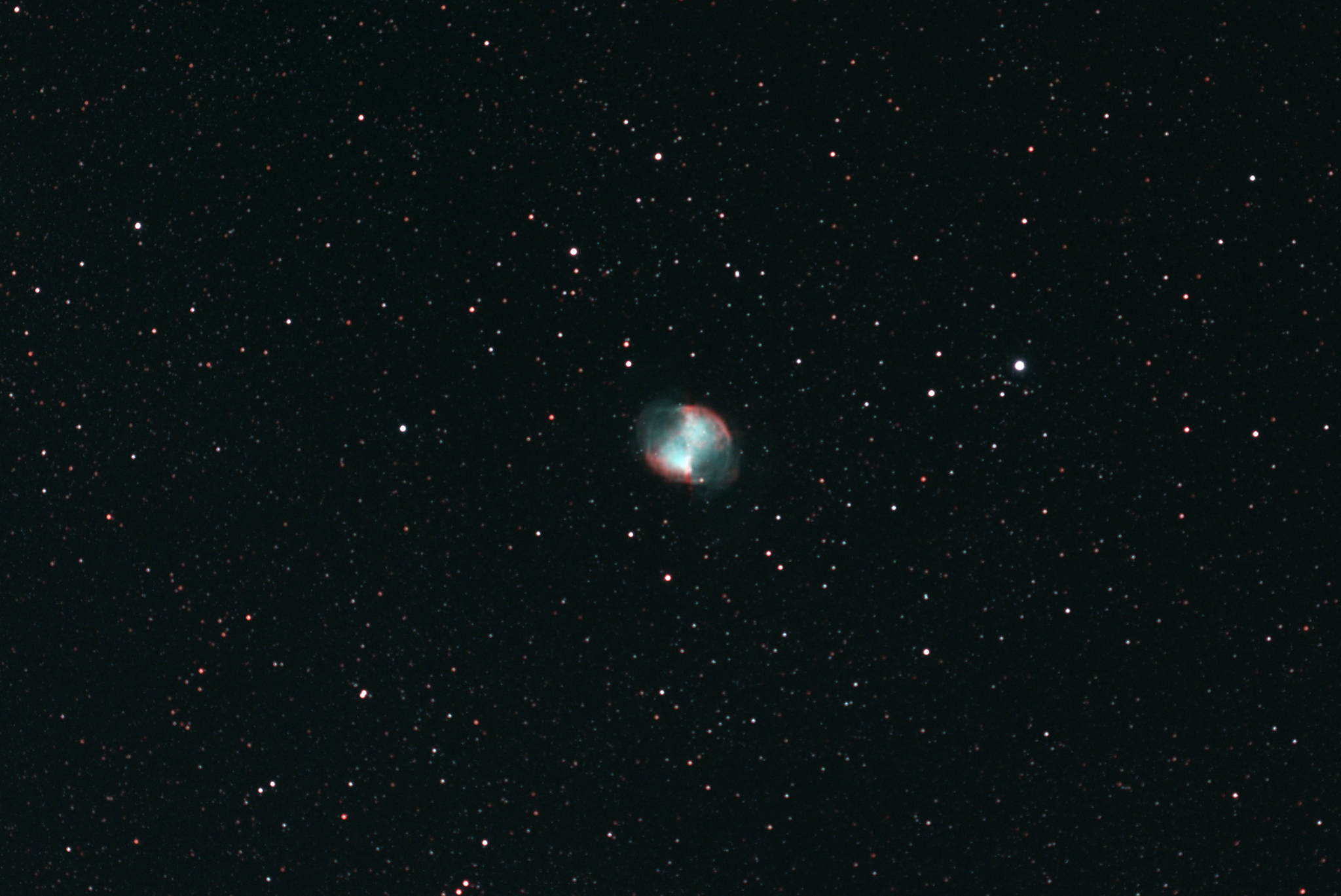
A less popular name for this target is the apple core nebula , which I think fits better. At roughly a distance of 1,227 light years away, the Dumbbell Nebula was the first planetary nebula that Charles Messier discovered in 1764. The term 'planetary' generally means it has a small round planet like shape when viewed in a small telescope. This nebula is the result of a star shedding off in layers, which in this image illuminate in clouds of red and blue. In 1885, the mathematician Johann Balmer came up with a formula to describe the wavelengths (or colors) that the Hydrogen atom emits when the hydrogen's electron drops in orbit. With his discovery, we are able to infer the gasses emitted by these nebulae by measuring the wavelength of light that it is emitting. For the Hydrogen atom, these wavelengths are referred to as "The Balmer Series". In this image, the deep red light indicates high levels of hydrogen gasses illuminating when electrons fall from its 3rd to 2...

The Elephant's Trunk Nebula

Image
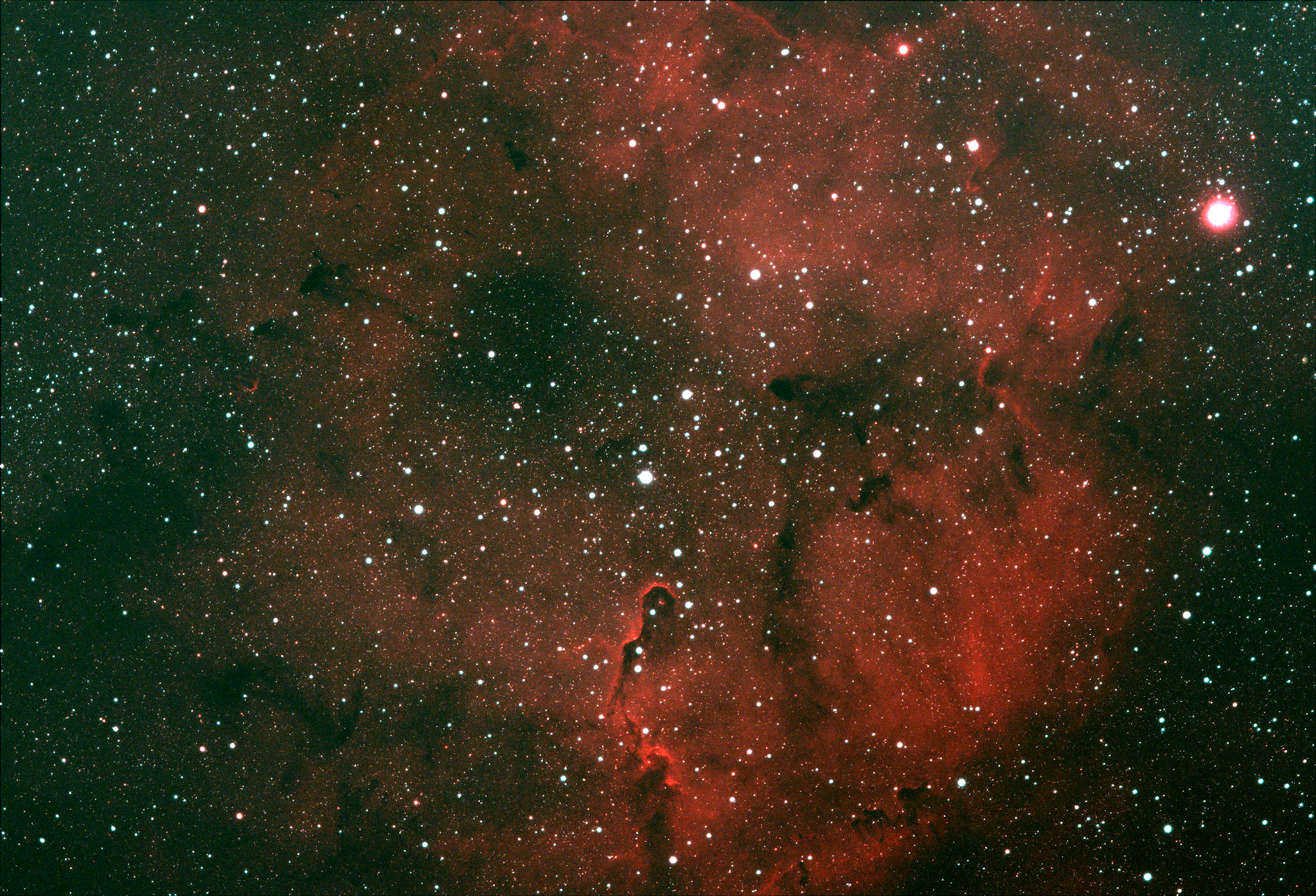
IC-1396 The Elephant's Trunk Nebula (The Misty Clove Cluster) The very bright star in the upper right is also known as Herschel's Garnet Star, which is one of the largest known stars with a radius of 1,000 times that of the Sun. If the Sun were that size, it would engulf the planet Mars, and just barely engulf Jupiter. See if you can see why they call it the Elephant's Trunk Nebula (it took me a while and is kind of small in this field of view).

The West Veil Nebula: NGC 6960

Image
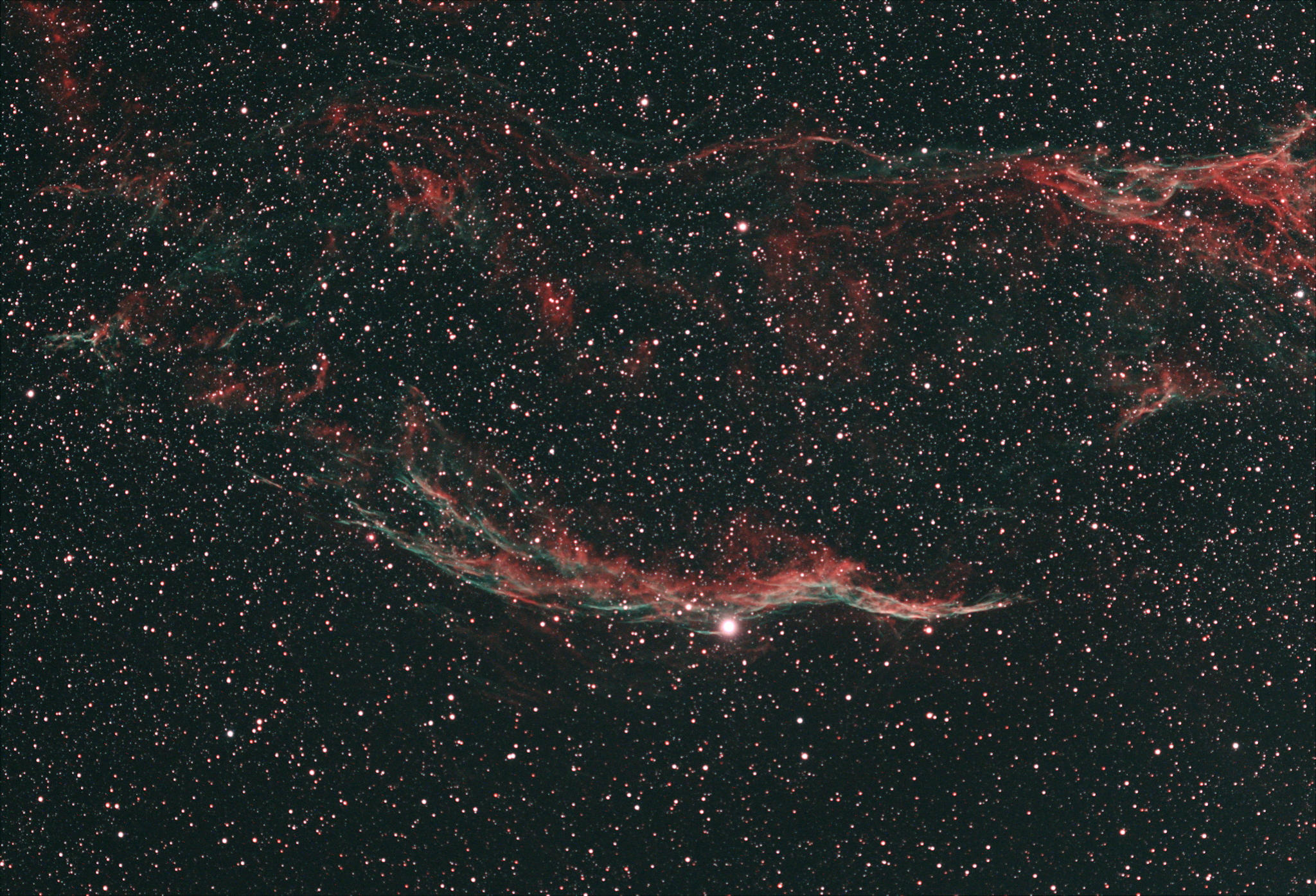
Discovered in 1784 by William Herschel, the Veil Nebula occupies a patch of sky six full-moon-lengths long. I couldn’t fit the entire Veil Nebula in the frame so this is only the Western region (the direction of ‘west’ in this photo would be pointing down and east would be pointing up). Common names for this region are: ‘Filamentary’, ‘Witches Broom’, and ‘Finger of God’ nebula. I chose this angle because I think it should also be called the ‘Flying Man’ Nebula. The Veil Nebula is a region of hot gasses that are remnants of a supernova. A supernova is the stellar explosion of a dying massive star. Stars burn massive amounts of fuel, but when they run out of fuel there is no longer enough outward force generated and it is overtaken by it’s own gravity. In this case, the star would have been 20x the mass of the Sun before it met it’s destructive fate. After a star goes supernova, the original object will either collapse to a neutron star, or a black hole or it will be entirely destroyed ...

The East Veil Nebula: NGC 6992

Image
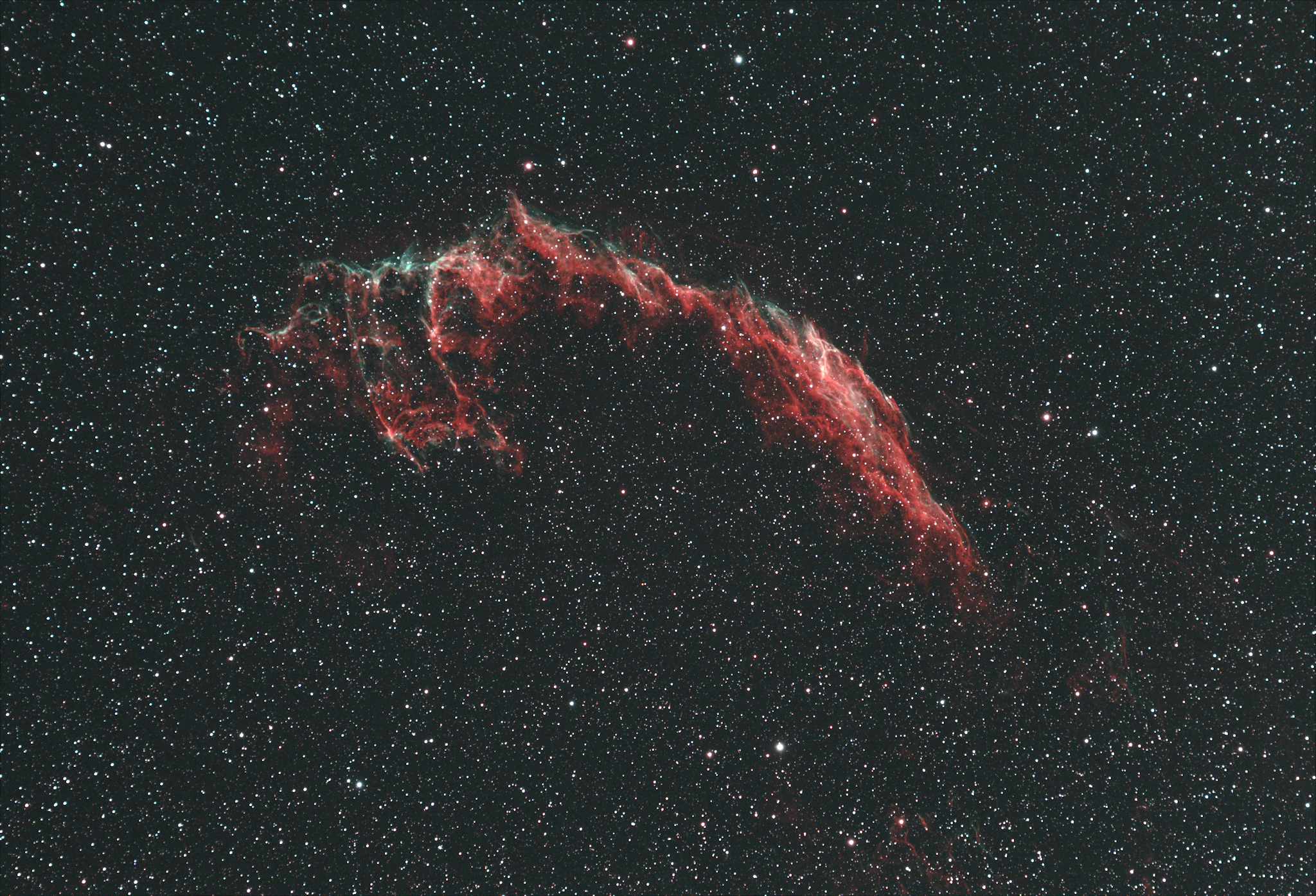
This is the eastern region of the supernova remnant known as the Veil Nebula. I first posted about the western region of the Veil Nebula and commented that it is too big to fit the full nebula in the field of view of my telescope. As with the western region, east is up and west is down. Even with this Eastern add-on, there is still one frame missing which would fit in between the two end-regions I captured so far. There might be smaller bits missing from the north/south regions as well. What about the star which was the source of the supernova? It is estimated to be almost evenly positioned between the west and the eastern regions, with its actual position being slightly closer to the western region from Earth’s perspective. After exploding, the star became a neutron star. Neutron stars are basically stars of a very small radius (“typically 18 miles”) that are mostly composed of tightly packed neutrons. A sufficiently massive neutron star will continue to collapse into a black hole. Th...

Messier 63: The Sunflower Galaxy

Image
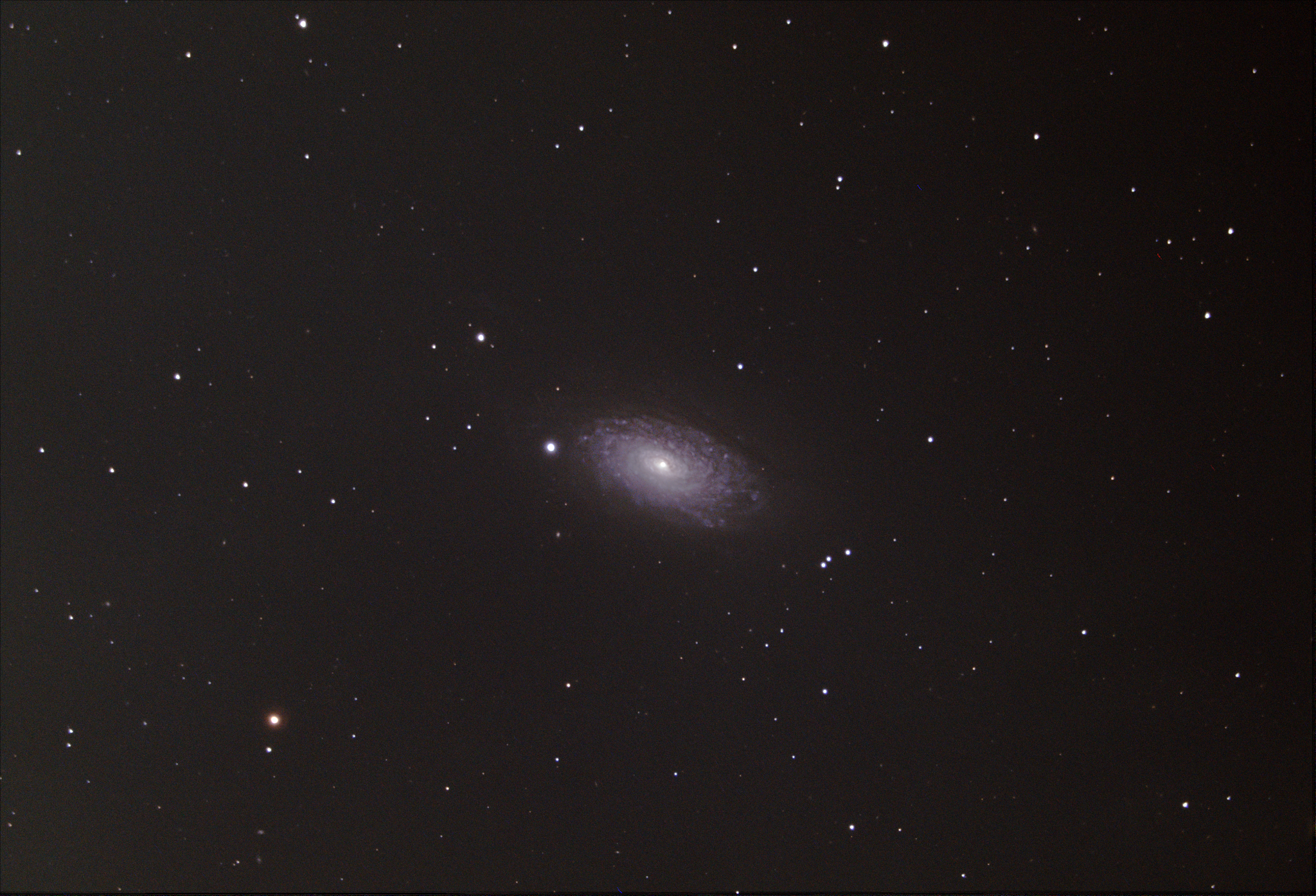
Say hello to other worlds roughly 30 million light-years away. A spiral galaxy classified as 'flocculent' (which I think means 'fluffy'), discovered by French astronomer Pierre Méchain in the 1700s. I'm reading a book that has the original observational notes for the Messier catalog: "...It contains no stars, & the slightest light to illuminate the micrometer wires made it disappear. Close to it there's an 8th magnitude star, which precedes the nebula in right ascension." There were apparently a lot of 'nebulae' in the Messier catalog that today we now know are galaxies due to improvements in optics, image sensors and astronomers. Actually, people were not aware that other galaxies even existed until December 30, 1924, when Edwin Hubble discovered that Andromeda (Messier 31) is really a galaxy. Only then did people begin to grasp that the Milky Way was just one among many: Our world got a lot bigger that day...

Vega: α Lyr

Image
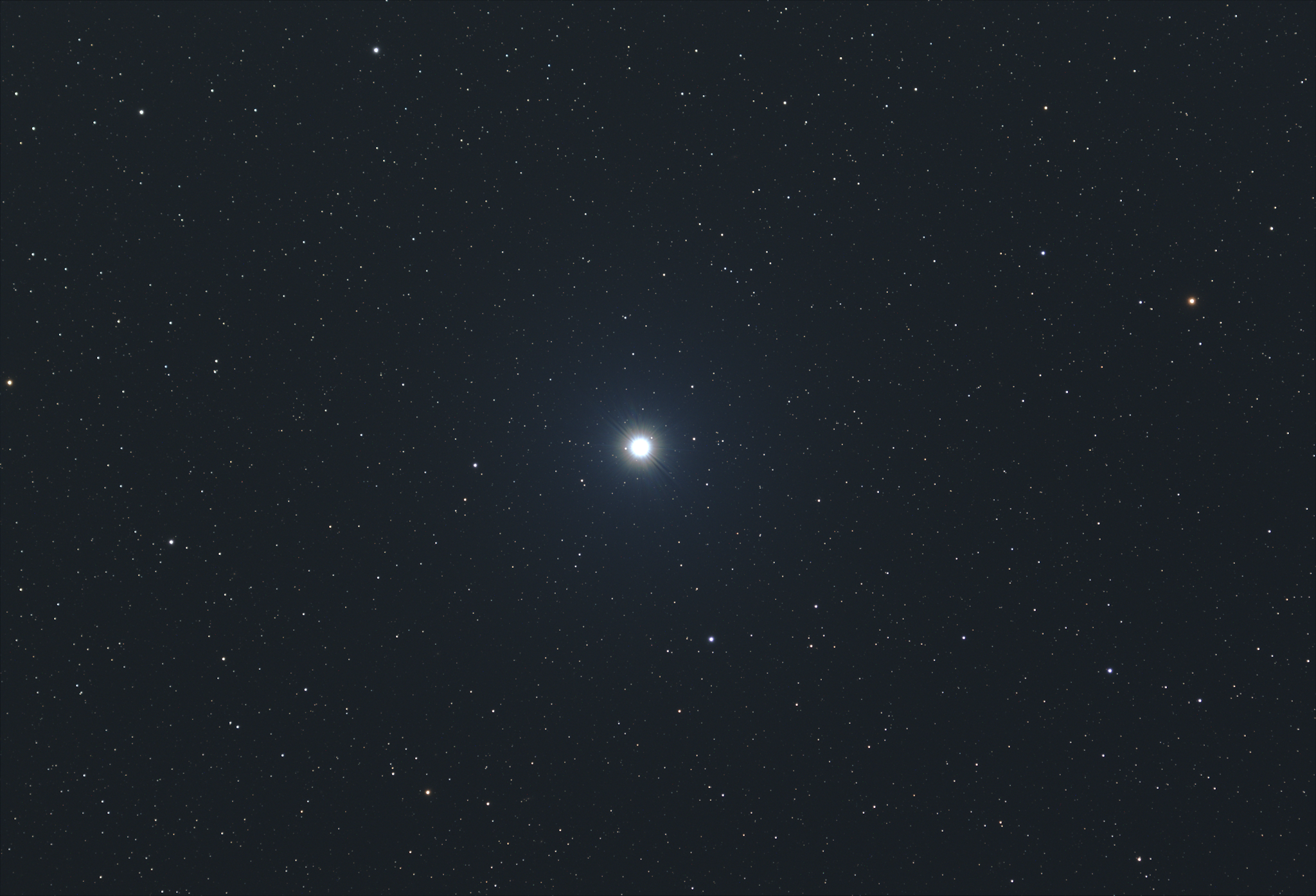
Vega is a bright star in the night sky that is only 25 light years from Earth. You can spot it in the summer by looking nearly straight up (slightly east before midnight), it will be the brightest star. Joined by stars Deneb and Altair, Vega is part of a 3-star asterism known as the Summer Triangle, which is a very large right angle triangle which Vega is the point at the 9 0 degree angle. The other two stars are lower in the eastern sky. Vega is only 450 million years old! I suppose to put this into perspective, our Sun is 4.5 billion years old (10 times the age of Vega). Interestingly enough, Vega’s lifespan will also be one tenth the lifespan of the Sun. It is about 2x the mass of the Sun as well. Apparent Brightness Vega is very bright, with an apparent magnitude of 0.03. The Apparent Magnitude scale is a logarithmic measure of brightness as seen from Earth. This scale is dependent on the object’s intrinsic brightness, distance from Earth as well as extinction of light when passing...