Posts

Happy New Years, Pelicans!

Image
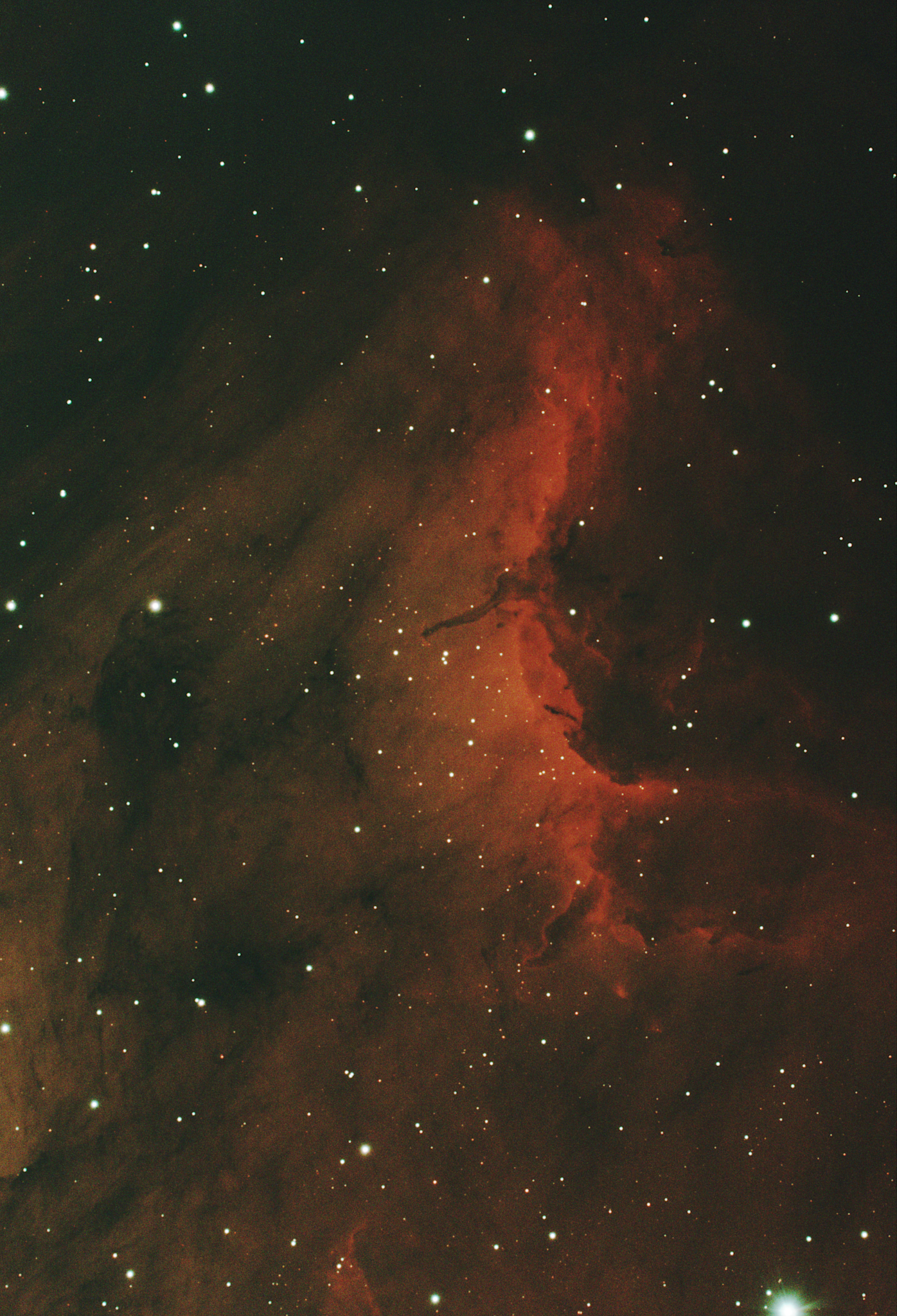
The Pelican Nebula. Taken under Michigan skies throughout September, 2022. The Pelican Nebula is an emission nebula which has features resembling a long-billed waterbird known as the pelican. If the bird's bill doesn't first pop out to you, look for the pelican's neck and the rest should reveal itself. However, beyond the neck, head and bill, I don't see anything more resembling the bird. The next image is rotated and framed to most easily see the pelican (spoiler alert): The Pelican's Profile in the Pelican Nebula So is there really a pelican shaped cloud of light-emitting gas in space? No, not really. When we take a closer look at the structure, we begin to notice that the gradients that once gave the appearance of the opened-bill of a pelican are actually a stream of opaque dust in the foreground. The same is true for what ends up shaping the top of the pelican's head. In contrast, when we look at the back of the pelican's neck (right side in the above ma...
The East Veil Nebula

Image
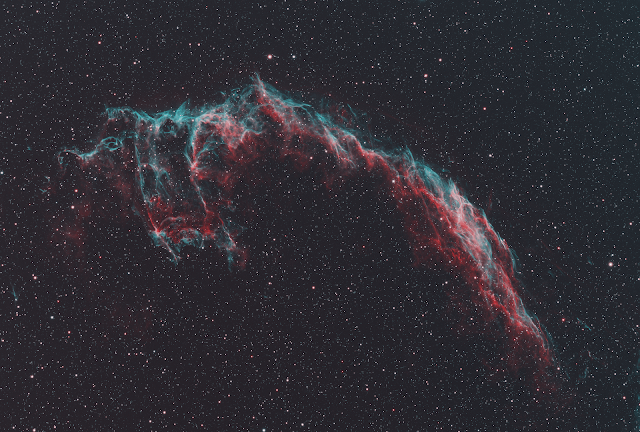
Supernova remnant NGC-6692 - The East Veil Nebula. Taken under Michigan skies, July 2022 A Supernova Remnant The East Veil Nebula is one portion of the much larger supernova remnant known as the Veil Nebula . As the name suggests, a supernova remnant are the remains of a star which has undergone runaway nuclear fusion resulting in a massively luminous explosion. The supernova event that created the Veil Nebula happened about 10,000-20,000 years ago. This image was taken using only two different narrowband filters: Hydrogen-alpha (Hα) and Oxygen-3 (Oiii). The red in the image comes from the Hα data while the Oiii is assigned equally to the green and blue color channels. Realistically, Hα is in the deeper end of the red spectrum while Oxygen-3 is more in between green and blue. The image may not be that far off from what the actual color appearance of the nebula looks like. Being able to record the object in different wavelengths makes it much easier observe specific structures the gasse...

The Cygnus Wall of Star Formation

Image
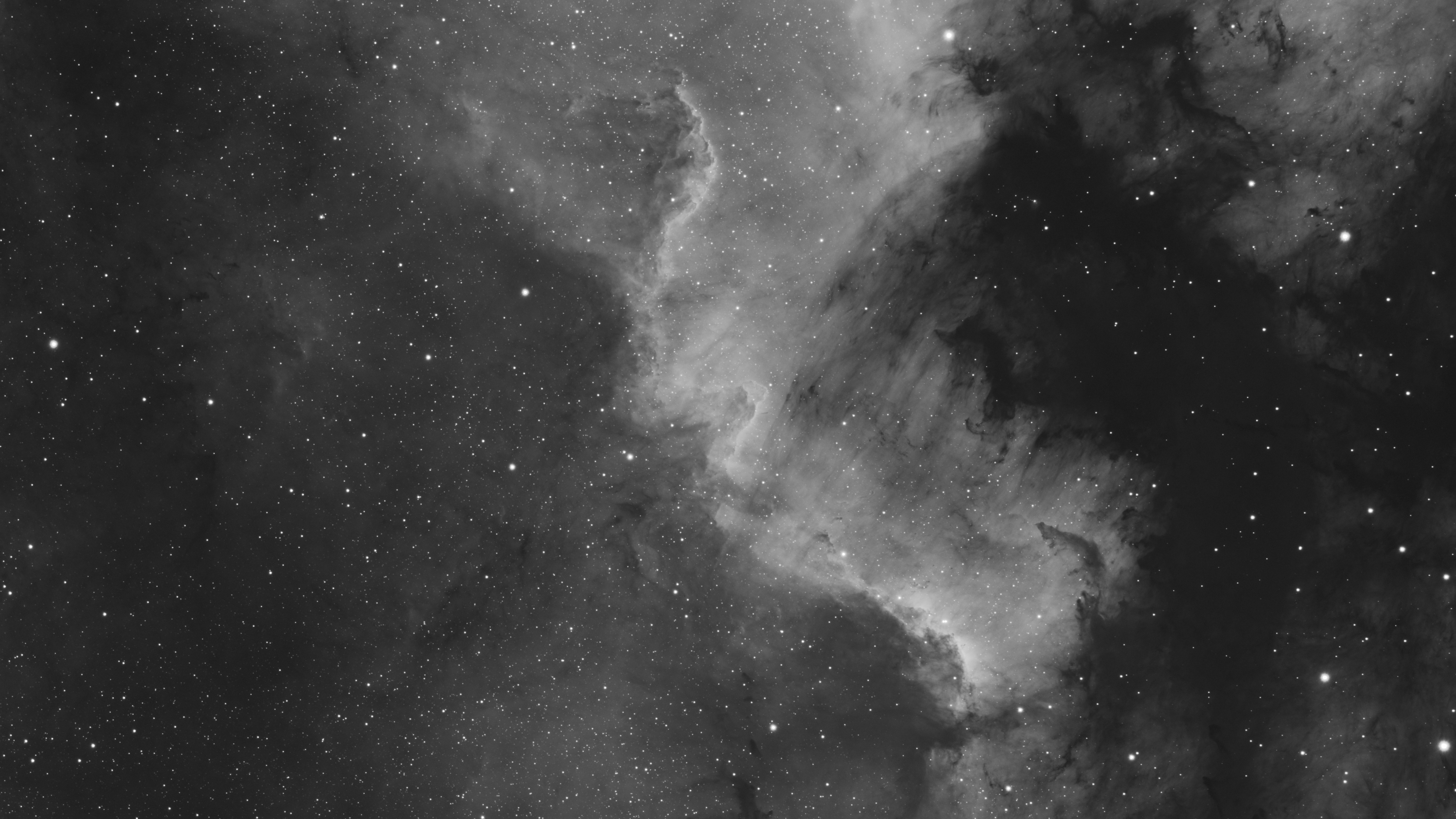
The Cygnus Wall in Hydrogen-Alpha: Taken under Michigan Skies, July 2022. In the 2nd century CE, Claudius Ptolemaeus (Ptolemy) wrote the Almagest; a mathematical and astronomical treatise on the apparent motions of the stars and the planets. This influential text was leveraged for the next 1,200 years to support the geocentric solar system (earth-centered) until the the early Renaissance when the helio-centric (sun-centereed) model was developed by Nicolaus Copernicus. In the Almagest, Ptolemy had divided the night sky into 48 constellations; Cygnus being one of them. The constellation Cygnus, being Greek for Swan, earned its name because the brighter stars in this area of sky seem to resemble that of a bird in flight. What people in Ptolemy's time could not know, was the massive amount of nebulous activity that exists within this region of sky. From the massive regions of hydrogen that spread far around the star Sadr, to the North America Nebula spread around Deneb and to the left...

The Tadpoles and Letter Y Cluster: IC 410 and NGC 1893

Image
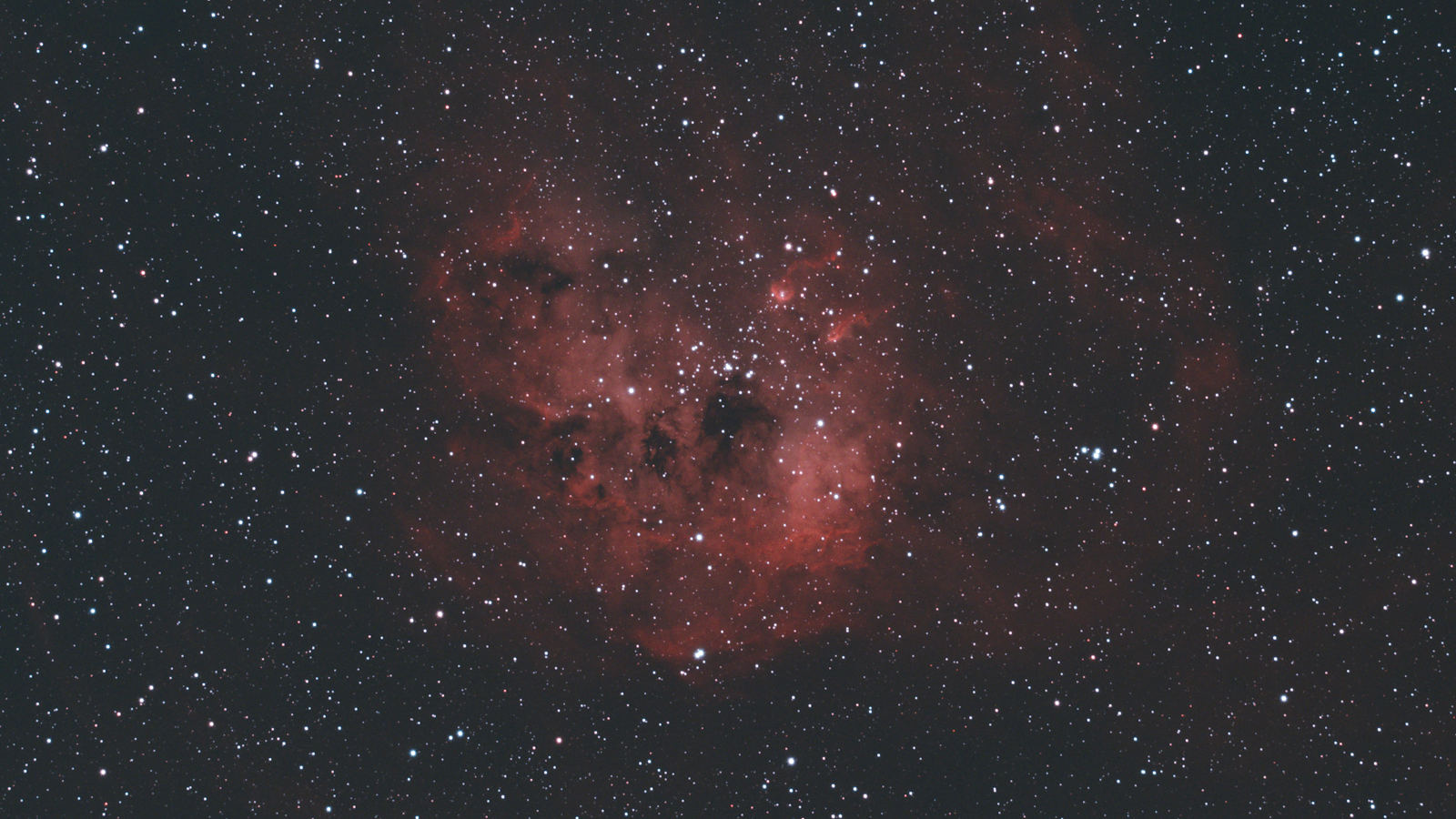
The Tadpoles Nebula and the Letter Y Cluster: Taken under Michigan skies Jan 2nd, 2022. I have not had a chance to write anything up for this target but I didn't want to forget about it so I am posting the photo without all of the words. Enjoy!

The Heart Nebula: IC 1805

Image
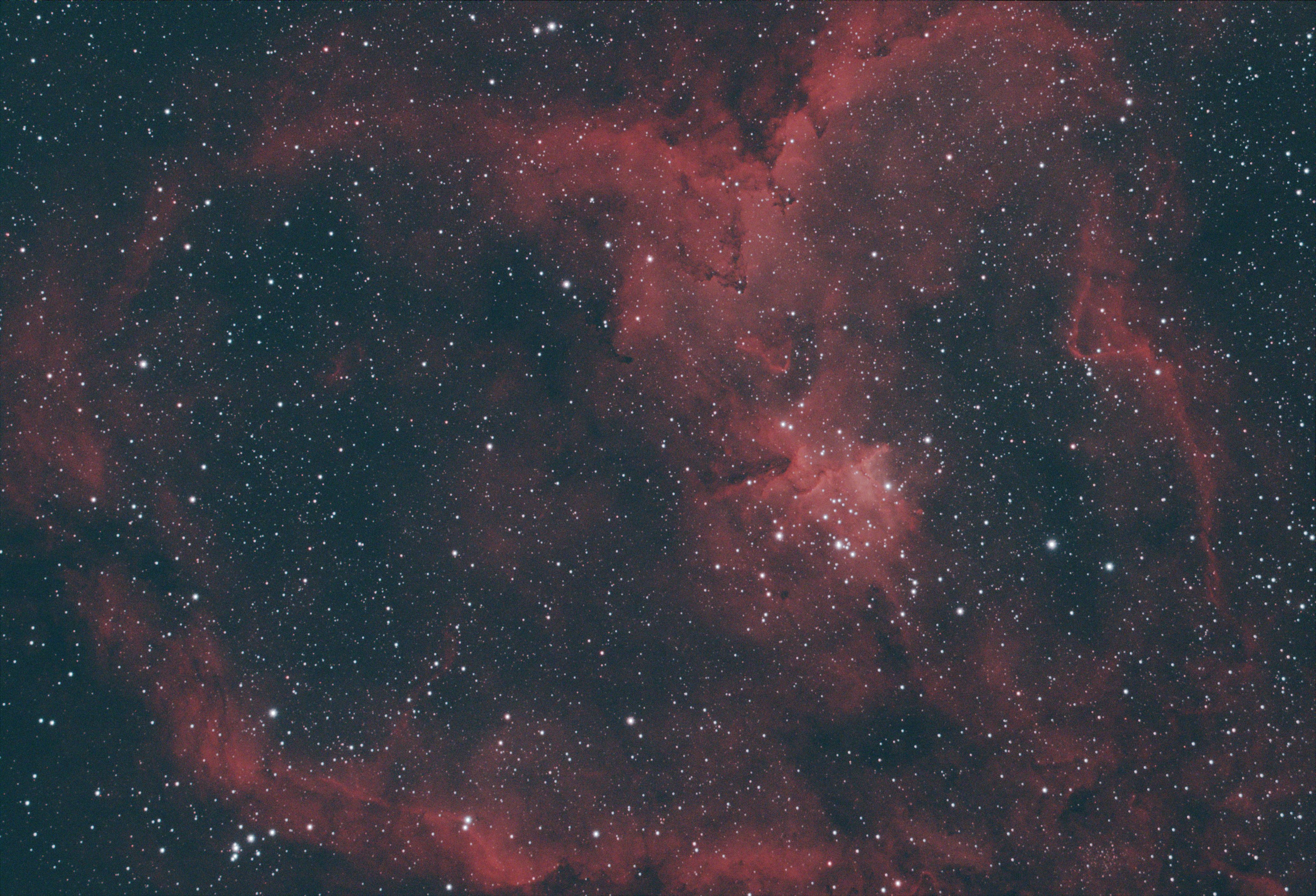
The Heart Nebula: Taken under Michigan skies, December 13th, 2021 Discovered by William Hershel in 1787, IC 1805 was coined the Heart Nebula for having a structure that sort of resembles that of the human heart. The Heart Nebula is an emission nebula which means it's a cloudy structure of ionized gasses that emits its own light. The wavelength (or color) of light that nebulae emit at will tell you exactly what gas the cloud is composed of. The Heart Nebula emits primarily at a specific red wavelength of light: 656.3 nanometers. This wavelength of red tells us that the nebula is composed of ionized Hydrogen gas labeled Hydrogen-Alpha . Ionized hydrogen can emit at four different colors in the visible spectrum: violet, blue, light-blue and red. The hydrogen atom will release a photon at one of these wavelengths when its electron drops orbits. The photon's wavelength depends ...

A Tale of Many Islands: Getting to Know the Neighborhood

Image
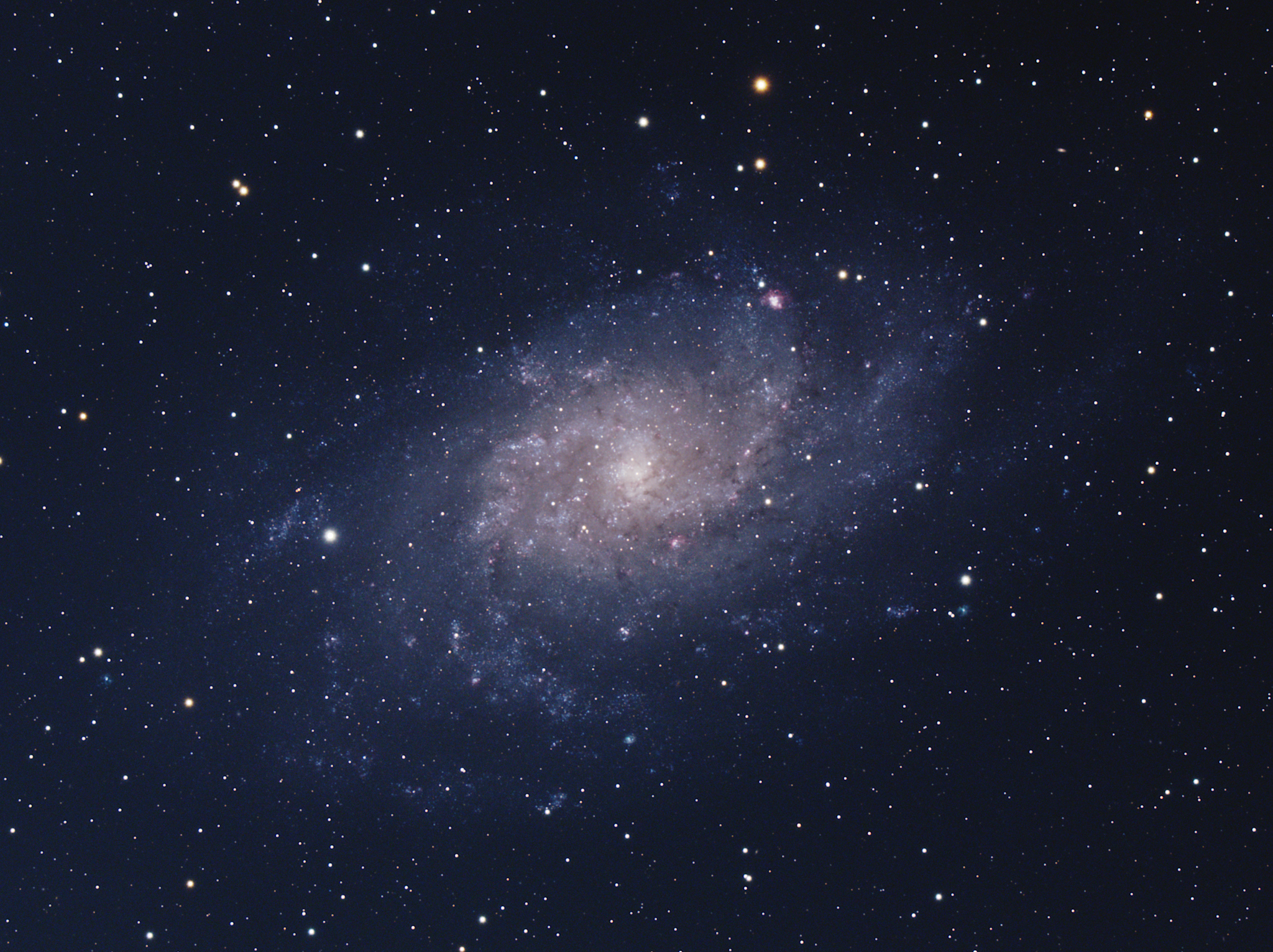
Triangulum Galaxy (Messier 33): Taken under Michigan skies November, 2021. If you haven't already, read this post first:  A Tale of Many Islands . To recap, I mentioned the historic milestone where Edwin Hubble produced evidence confirming the existence of other galaxies by measuring the distance to the Andromeda Galaxy (Messier 31). With this new method in measuring distances and with the old single-galaxy worldview no longer holding us back, we embarked on a journey to grasp the true nature and structure of the universe. Massive achievements in astronomical data collection, radio telescopes and earth-orbiting telescopes paved the way for scientists to begin modeling our universe. Leveraging statistical grouping methods, galaxies are clustered together based on their observed locations and velocities. The Milky Way belongs to what we refer to as the Local Group . This is...

A Tale of Many Islands: The Andromeda Galaxy

Image
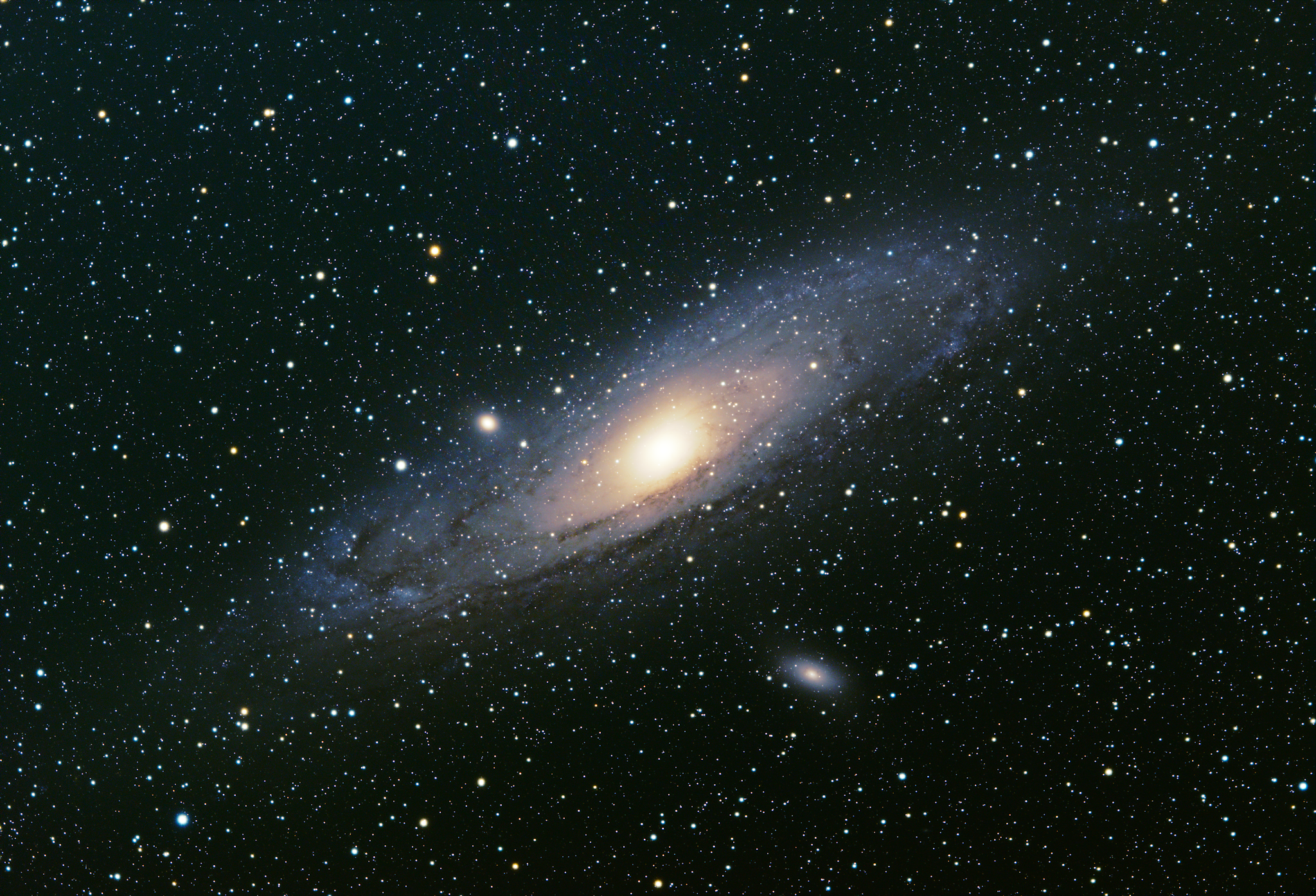
  The Andromeda Galaxy (Messier 31) with other galaxies M32 and M110 The Andromeda Galaxy is a fantastic marvel in the night sky right now. It is physically 50% larger than our own galaxy and contains an estimated 300 billion stars. By pairing its large size with a relatively short distance to our galaxy (2.5 million light years), its full appearance in the sky spans that of 6 full moons. However, the portion that is visible to the human eye will appear smaller since only the galactic core is bright enough for us to distinguish. The estimated trajectory of M31 suggests an eventual collision with our Milky Way Galaxy in about four billion years. The Universe as a Solitary Island The earliest recorded observations of the Andromeda Galaxy were written in the year 964 CE by the Persian astronomer Abd al-Rahman al-Sufi in the Book of Fixed Stars . In this book ...

The Veil Nebula

Image
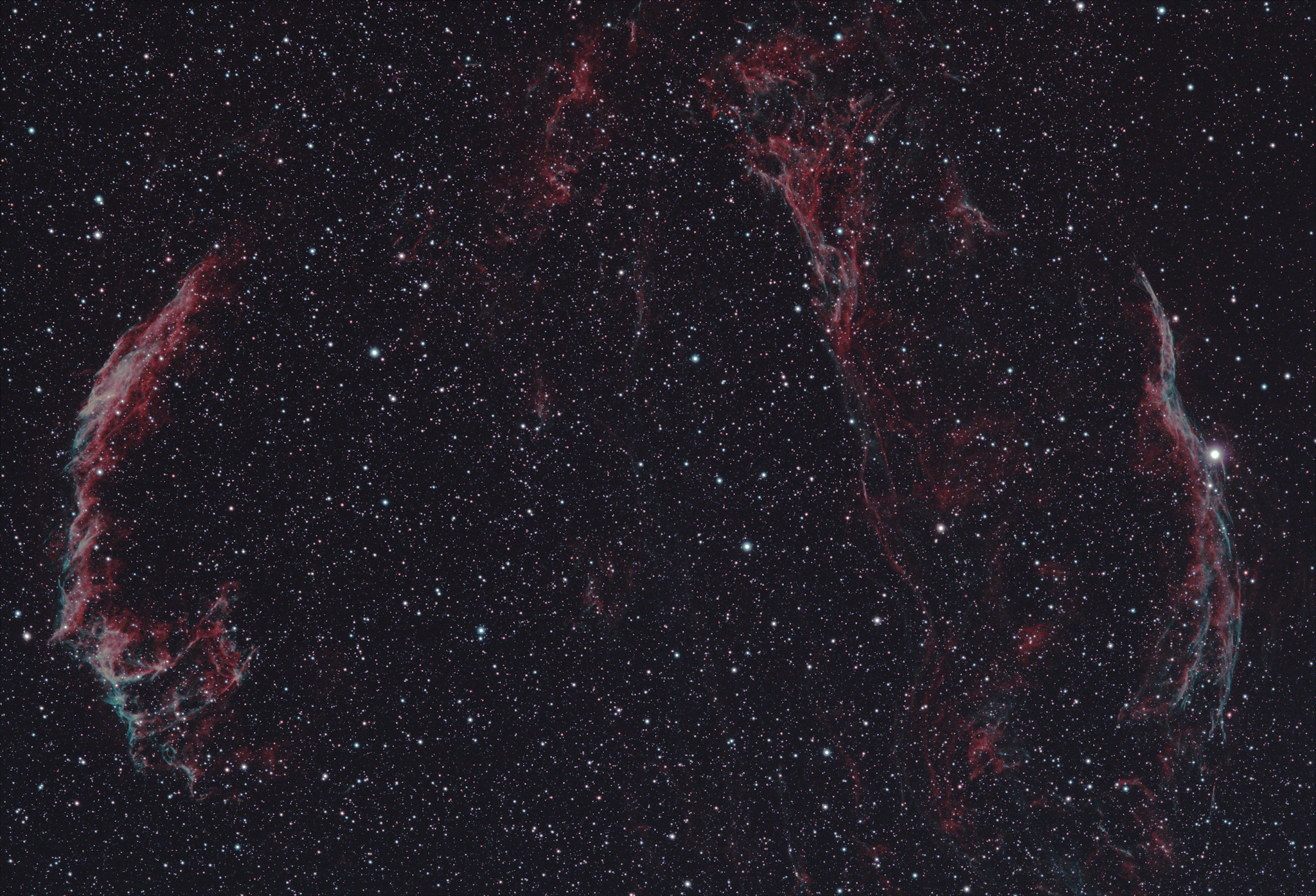
The Veil Nebula: Taken under Michigan skies August 5th, 2021 A view spanning six full-moons across the sky, the Veil Nebula is one of the many beautiful nebulous structures located in the constellation Cygnus (The Swan). Around 10,000 years ago, a dying star, roughly twenty times as massive as the Sun, exploded in its final phase of life: supernova. The wispy reds and blues are leftover remnants of the supernova explosion. The left portion and right portion of this supernova remnant are known as the Eastern Veil and Western Veil. Somewhere between these two structures is the neutron star remains from the supernova explosion, but it is probably way to small to resolve in my image. I made posts on the Eastern/Western veil nebula back in 2020. Since they were separate images, and did not include the space in between, they don't capture how massive the entire structure really is. Eve...

Saturn and Jupiter: Through the Clouds

Image
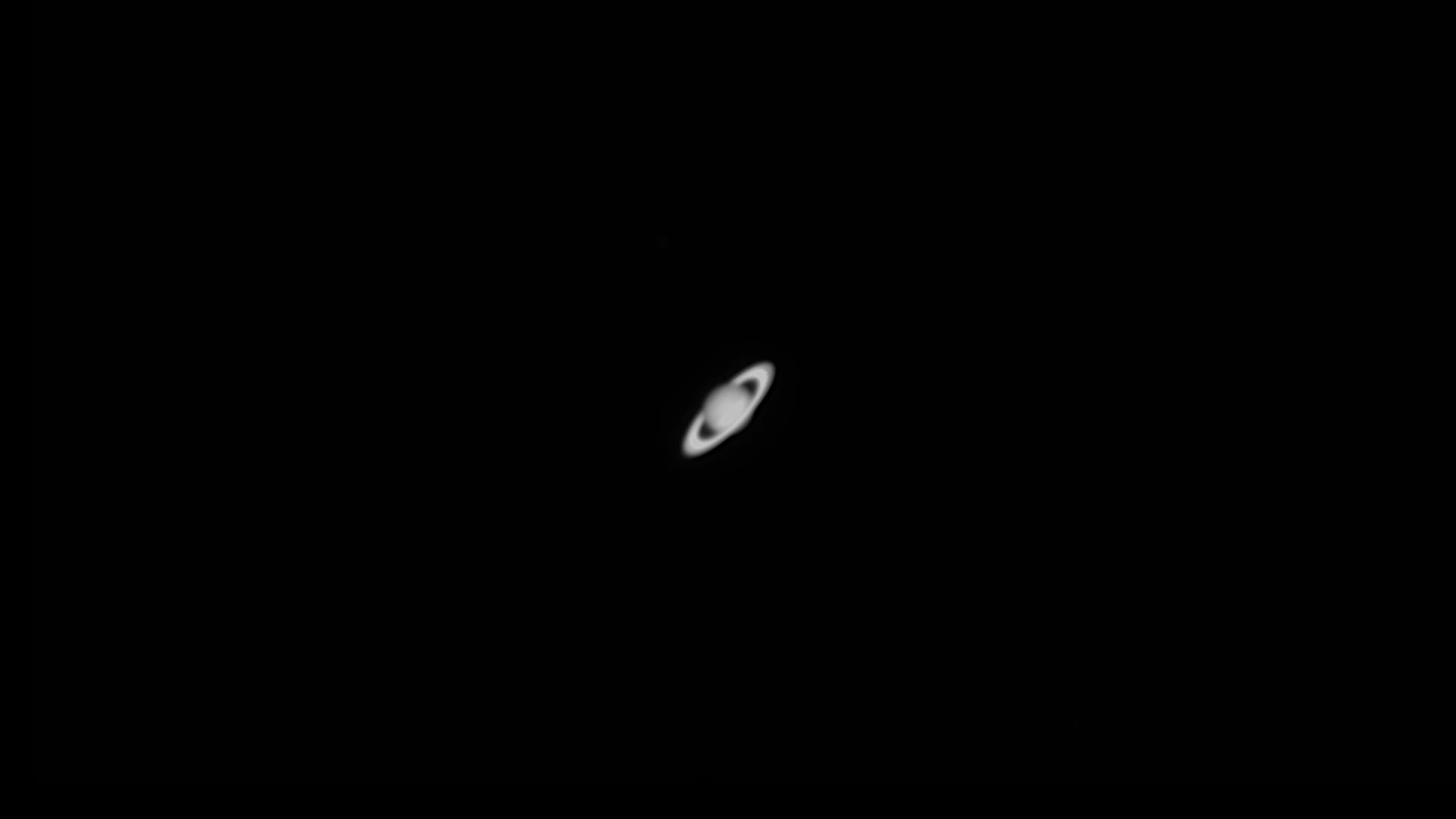
Saturn: Taken under Michigan skies August 2nd, 2021 Saturn hit opposition on August 2nd, 2021. Opposition is the instance where an outer planet aligns along a line with both the Earth and the Sun. This also means it is at its closest distance to Earth, making it appear its brightest as well as its largest when observed from Earth. Top all that off with a perfectly clear sky forecast! On numerous occasions the clear sky forecasts will be at odds with the national whether cloud forecast. Some occasions, the clear sky forecast will be right while other occasions the national whether cloud forecast is right; so there is always a chance that clouds ruin your parade. Last night (Aug. 2nd) the cloud forecast predicted correctly and the clouds ended up blocking my view of the planets for about 90% of the night. I decided to wait it out since I was all setup but the clouds persisted. However, I did manage...

The Pelican Nebula in Smokey Skies

Image
The Pelican Nebula: Taken under Michigan skies in July, 2021. With six hours of data on the Pelican Nebula I figured I would have enough to pull out a vibrant and sharp-featured photo to show. However, it turns out since we have wildfire smoke dumping over Michigan skies this past month, pollutants are scattering the faint light of deep sky targets while amplifying light pollution. The nebulous region where the Pelican nebula resides in is a large swath of sky full of Hydrogen gasses (H-II) which emit in a narrow band of red wavelength light. It turns out the particles making up this smoke pollution end up scattering the red wavelengths much worse than others. Hopefully you can still make out the pelican shape in this object.

The Crescent Nebula: NGC 6888

Image
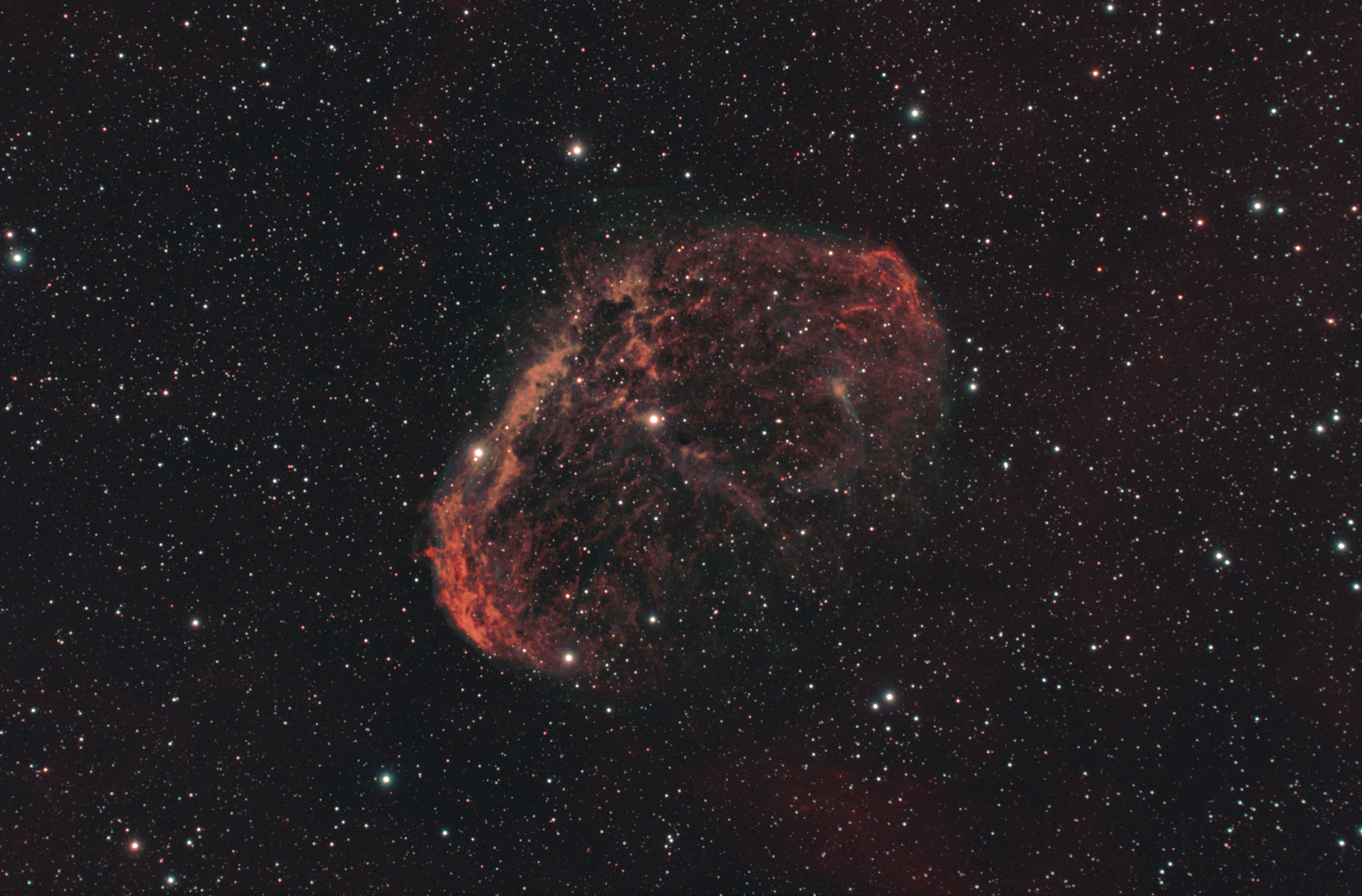
The Crescent Nebula (NGC 6888): Photo taken under Michigan skies on July 7th, 2021 At about 5,000 light-years away, the Crescent Nebula ( NGC 6888 ) is an emission nebula located in the constellation Cygnus (Greek for Swan). It was discovered by the German astronomer William Herschel in 1792. This beautiful brain-like marvel is apparently the result of interacting stellar winds from different stages of life of Wolf-Rayet star WR-136. In the star's past life (before becoming a Wolf-Rayet), it had undergone a transition into a Red Super-Giant some hundreds of thousands of years ago. As a Red Super-Giant, it slowly puffed out a layer of gas that settled around the star. This star eventually underwent another transition, turning from a Red Super-Giant to a Wolf-Rayet with 'fierce stellar-winds'. The interaction between the stellar winds and the earlier (and sl...

"Hello Moon"

Image
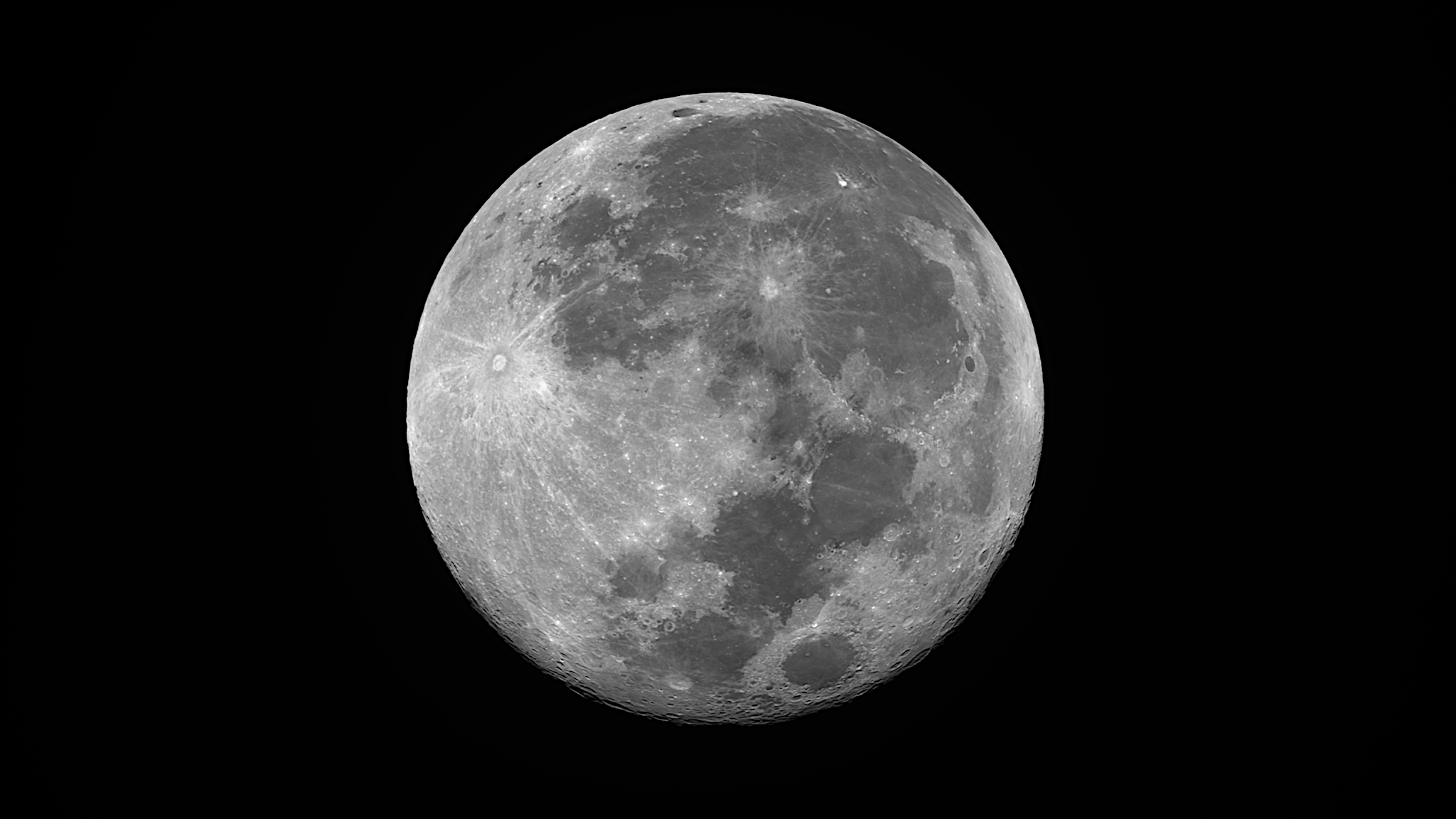
During the night of May 26th, 2021, I didn't think I was going to be able to get a good angle on the full moon that was out since it wasn't supposed to get high enough to clear the tree line in my backyard. I decided to image a few other things instead. A little later in the night, I went outside to make sure the telescope wasn't going to hit the tripod legs and found that the moon was beaming its light through a hole in the trees, glaring right at the telescope. So I slewed the telescope to point to the moon and managed to take photos for about five minutes before the moon began to creep back behind the trees. The Moon: May 26th, 2021 The Moon peeking through the trees

Summer Nebulae (Welcome Clouds)

Image
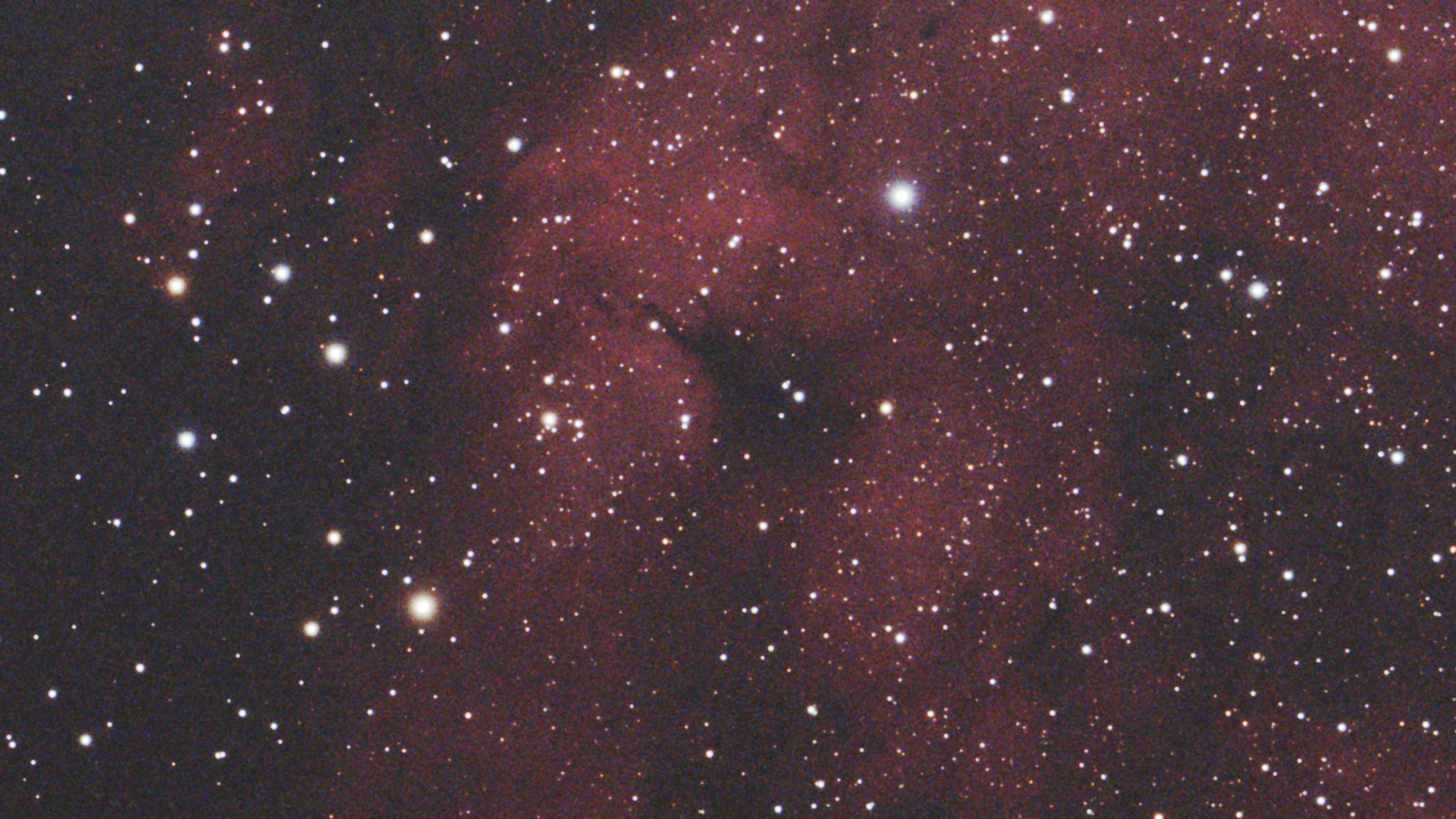
It is almost that time of the year when the summer nebulae (plural of nebula) are high enough in the night sky for imaging, while some can even be seen visually. In the past month I have been spending most of my time imaging the Pinwheel Galaxy (M101) so I would have enough data to pull out some of the faint details against the background of light pollution. I topped off M101 last night leaving me with twelve hours of exposure data. At the end of the night I decided to take some samples of different nebulae rising in the eastern sky just to share. Each image is only a single five minute exposure and I did some very basic histogram stretching to make some of the gaseous structures noticeable. There are a ton of excellent and colorful nebulous targets in the summer. Night time on Earth is beginning to face inward toward the Milky Way more and there is a lot to see. I have a great eastern view of many of these objects and there are even more that rise in the South (that unfortunately tree...

Greetings, Satellites

Image
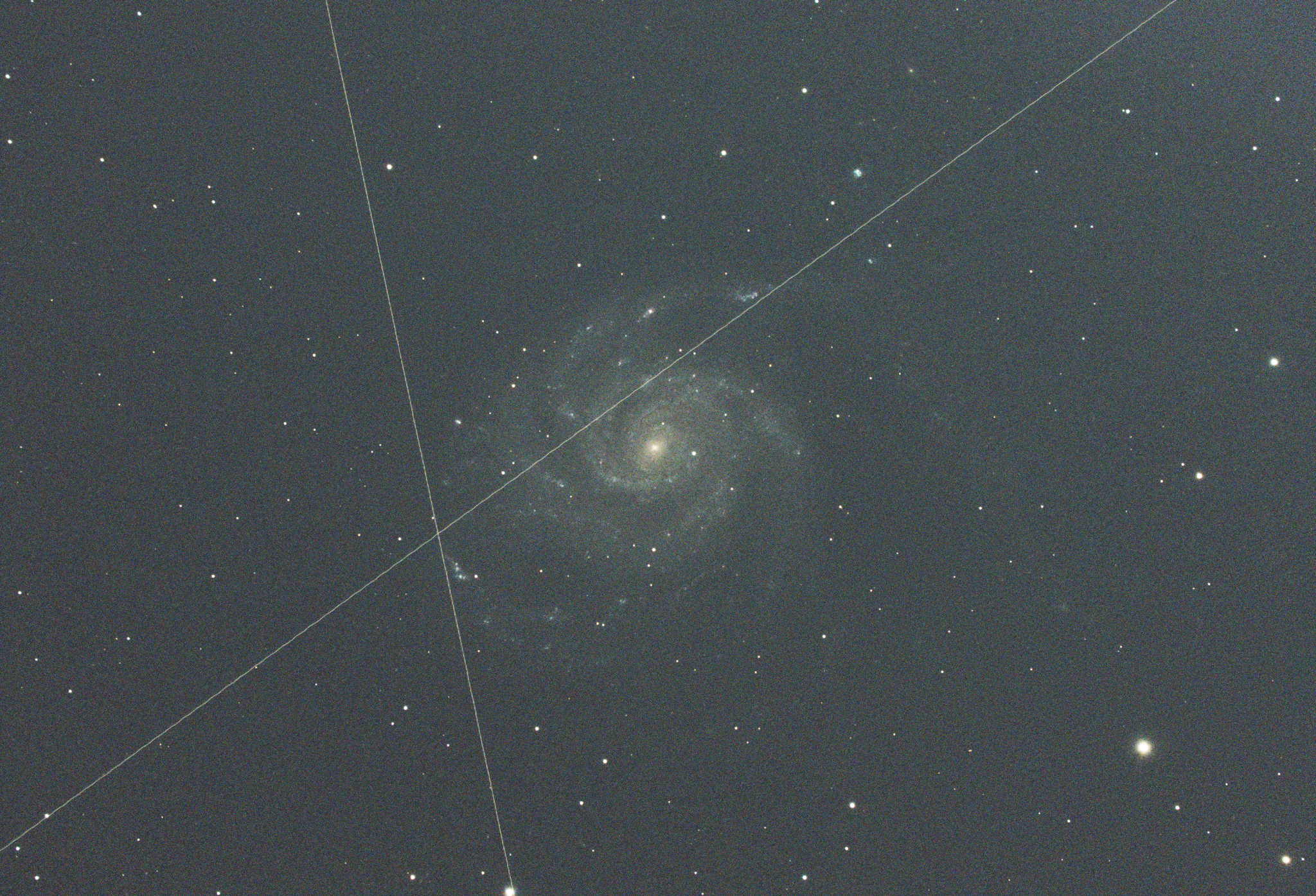
Gifted with a 'surprise' clear sky last night, I decided to set the scope up for some shots of Messier 101: The Pinwheel Galaxy. I was going over the images taken and was surprised to see in one of the five-minute images had been ruined not by one passing satellite but by two. They make a neat crisscross in the image, almost as if nearly missing collision while speeding through their earthly orbits. I opened my planetarium software Stellarium to see if I could identify the two photo-bombers and thought I’d share a little bit of what I found out. In a 300-second exposure, a lot can happen to muck up your data. From poor star tracking, passing clouds, satellites, airplanes and even meteors: If these near-earth occurrences were not your primary target, they end up leaving nasty marks on your image as they skirt by uninvited. Since faint deep sky objects require a lot of images to make out faint detail, most of these marks are outliers in the ov...

Whirlpool Galaxy: Messier 51

Image
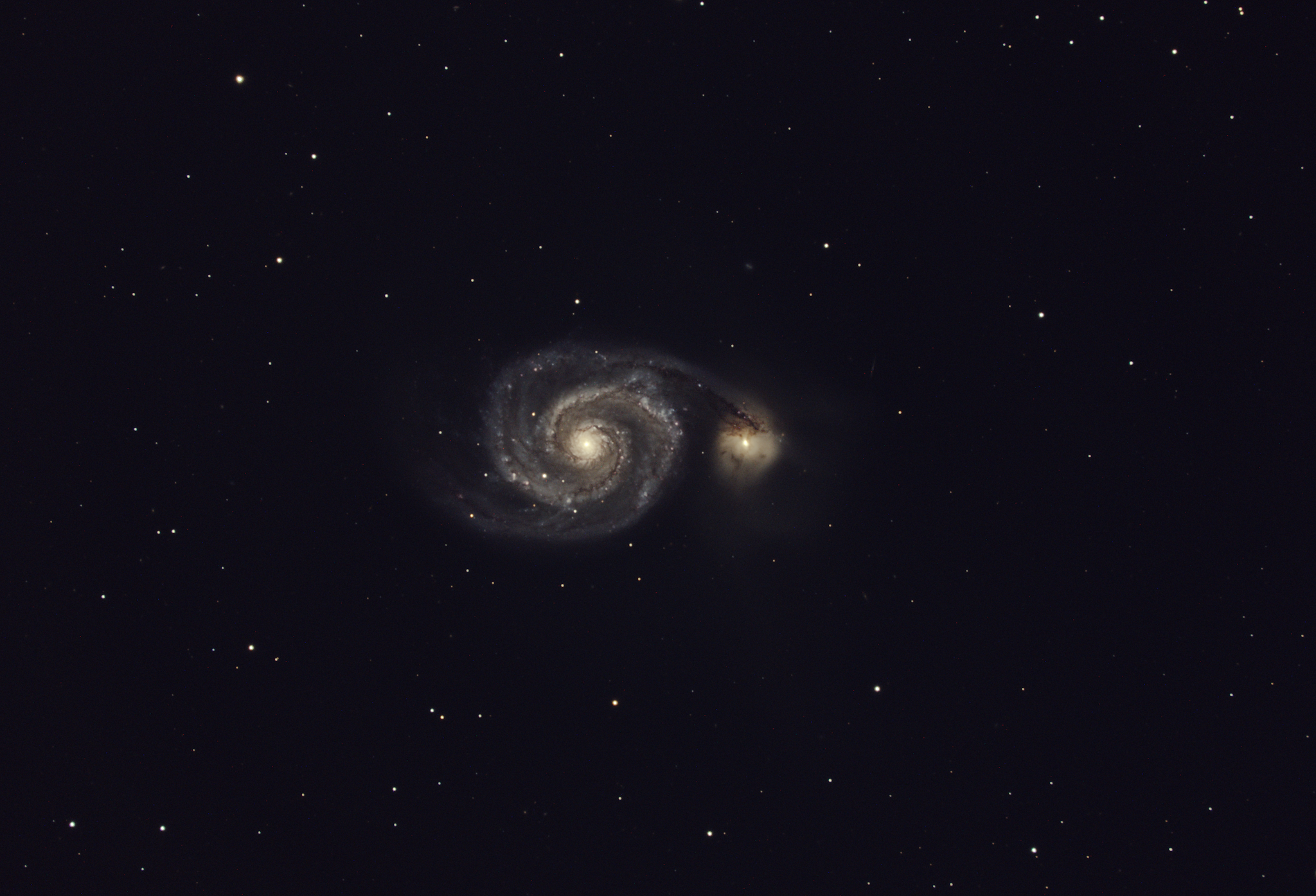
Messier 51: Whirlpool Galaxy M51a (left) and M51b (right) At 31 million light-years away, Messier 51 is actually two interacting galaxies. In this photo, M51a (the Whirlpool) is the larger spiral galaxy. The smaller companion, M51b, is classified as a dwarf galaxy and is seen at the end of one of the spiral arms of M51a. Before Copernicus and Galileo, people believed that Earth was the center of existence. The sun, the stars and planets revolved around us. After all, that is exactly how it appeared to be (with the exception of a few 'wanderer' planets and occasional passing of comets). With the advent of advanced mathematics and the birth of the telescope, humans made discoveries that led to many realizations; that Earth is not the center of our solar system. The Sun is not the center of our galaxy. Before we were aware of galaxies other than our own, the...

The Great Orion Nebula: M42

Image
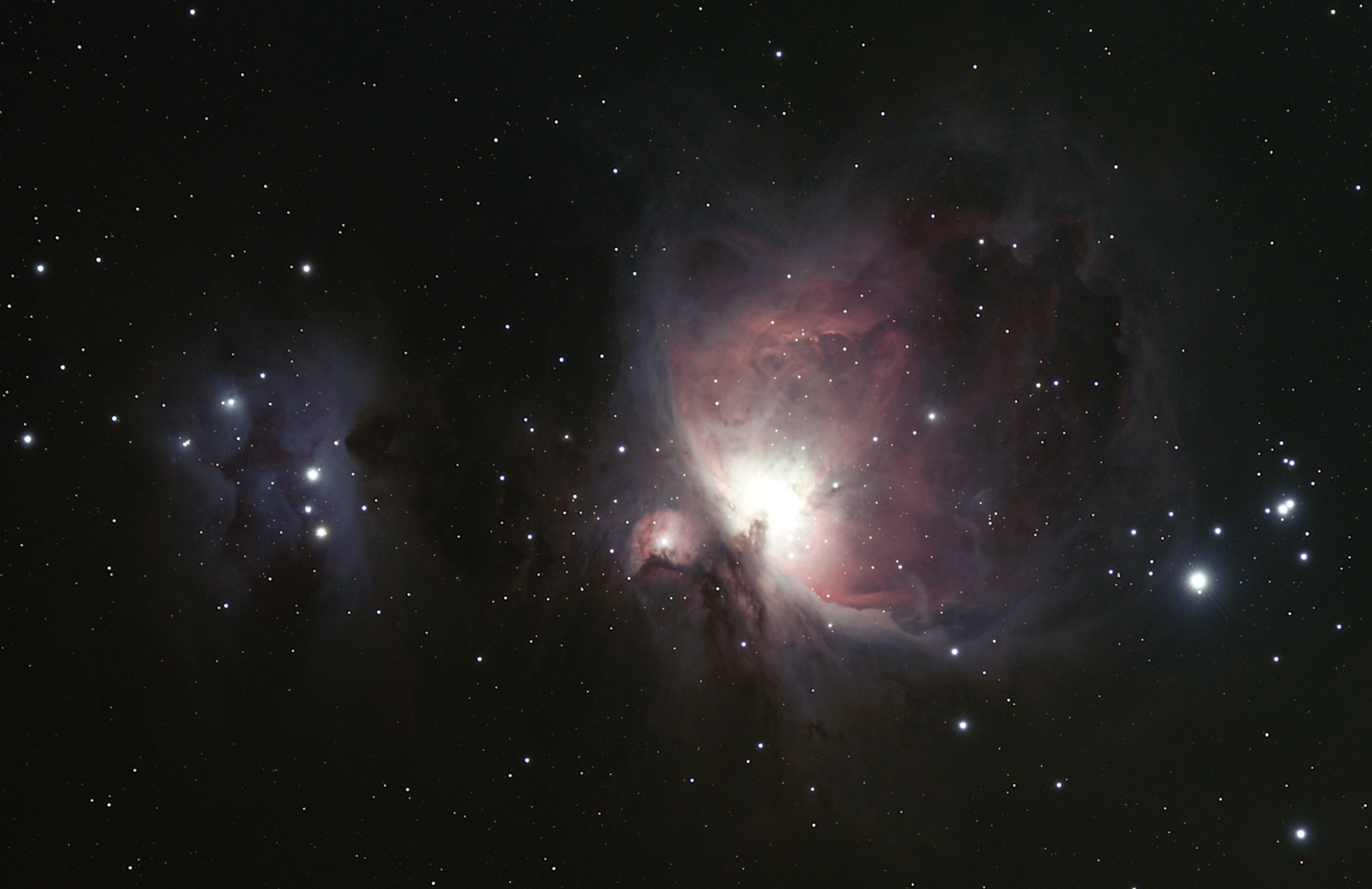
The Great Orion Nebula (Messier 42)   Located below Orion's belt in the constellation of Orion, the Great Orion Nebula is the brightest nebula visible in the night sky.  Even under light polluted skies, M42 can be seen with only a modest set of Binoculars (try it out if you haven't yet). The Orion constellation: 1/11/2021 at 10:45PM EST from SE MI The Constellation of Orion can be found during the winter months by looking south. As of today, January 11th, it will be visible in the south-east after sunset, reach its highest directly south at 11pm, and begin to set in the West just past 2:30am (for those of you in or near Michigan). I usually look for the 3 stars in a line that make up Orion's belt along with the two much brighter stars Betelgeuse (above the belt) and Rigel (below the belt). ...

The Pleiades: Messier 45

Image
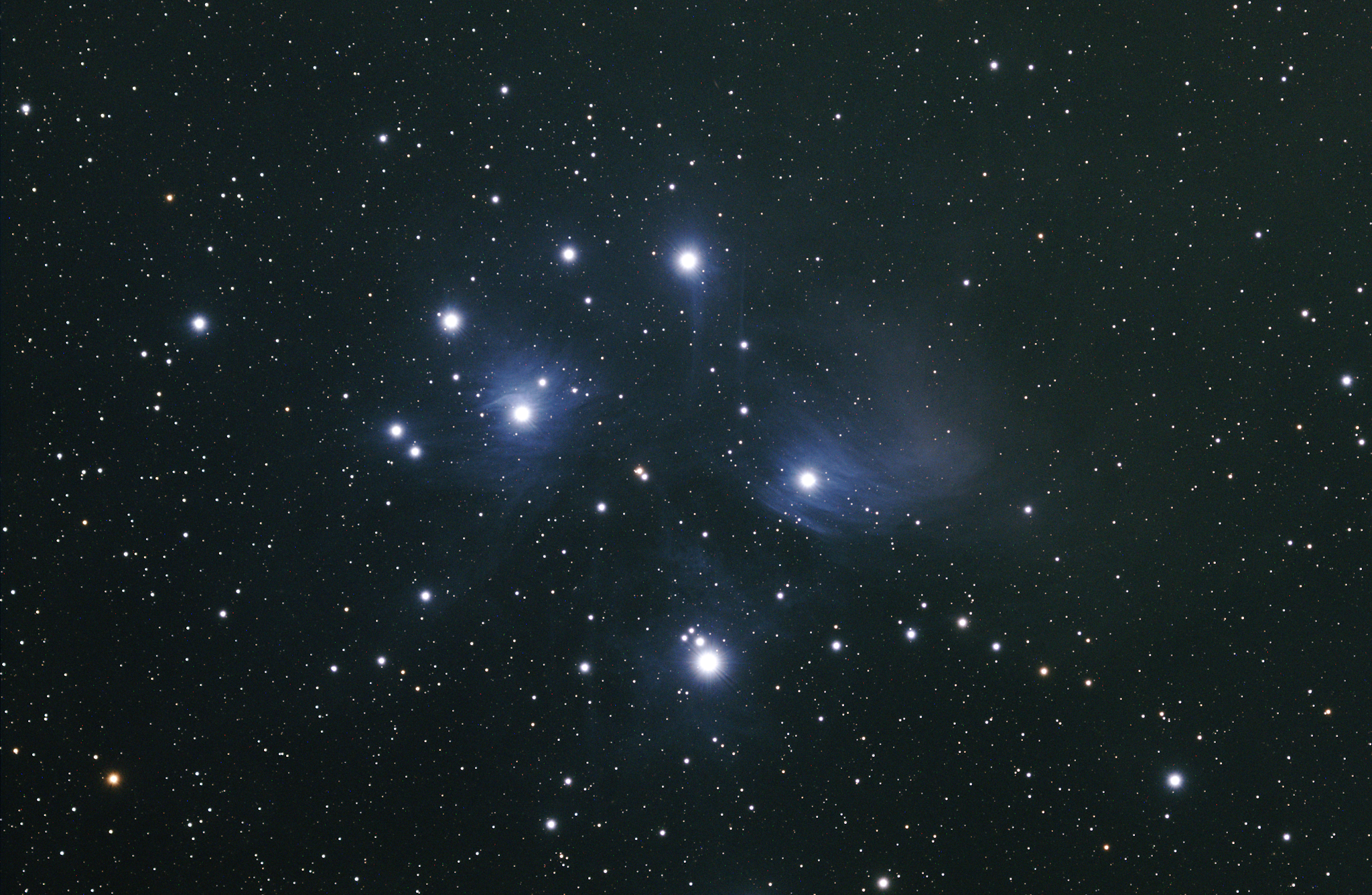
Type: Open star cluster Age: ~100 million years Distance: 444 ly Also Known As: The Seven Sisters Michigan has been very cloudy over the past few months and I haven’t had many opportunities to be out imaging. I was however able to record some data on the Pleiades star cluster. I did not capture as much time on this target as I normally would like but I think it turned out good considering the constant parade of clouds lately. M45 is one of the closest star clusters to Earth and is easy to spot in the night sky. To me, this is easy to spot even from my light polluted back yard as it looks like a smudge in the sky. Pointing binoculars or a scope at it reveals the blueish stars that form the Pleiades. There is some blueish cloudiness to this cluster (reflection nebula) that was initially thought to be dust left over from the formation of the stars, but it is now believed to be an unrelated dust cloud in the interstellar medium; dust in between the star cluster and Earth that is sc...

The Moon

Image
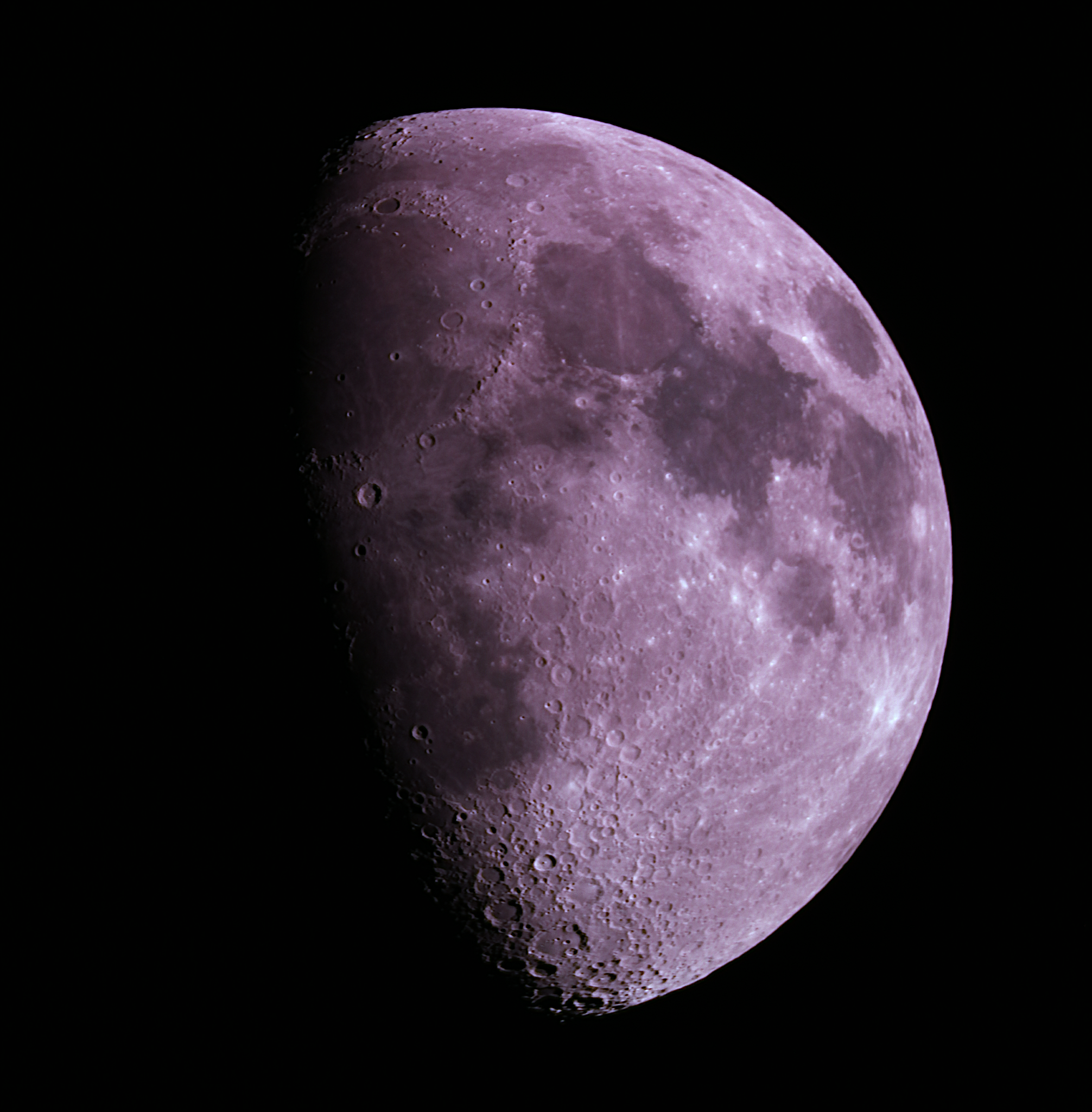
NASA made a big announcement today, that they have confirmed the existence of water on the surface of the Moon. This was confirmed using SOFIA , or the Stratospheric Observatory for Infrared Astronomy. SOFIA is literally a telescope that rides in a plane that flies the very upper part of Earth's atmosphere while recording data. Nobody is claiming that there are any lakes or streams of water, but instead that the water is possibly trapped by glass. When micrometeorites end up striking the moon's surface, it is common that the impact turns some of the lunar material into glass. It is being proposed that the water may be trapped under (or in) this glass, which could be why the water has not sublimated (turning from ice to gas) when the sun's rays are cast on the moon. (This is by no means the only explanation and could turn out to be wrong). It may not sound like a huge breakthrough, but this really is an excellent clue that helps to better understand the formation of the Eart...

The Dumbbell Nebula: Messier 27

Image
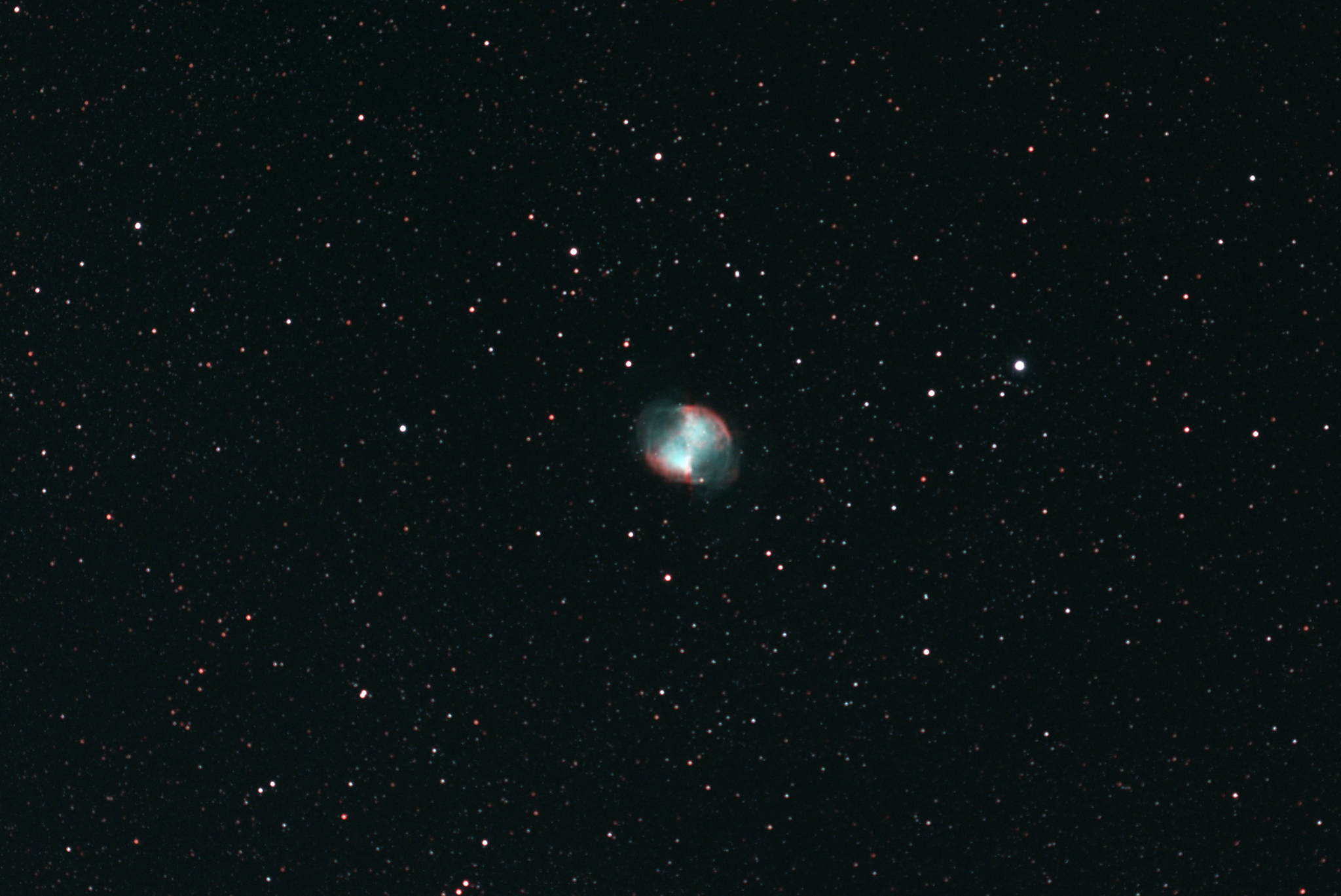
A less popular name for this target is the apple core nebula , which I think fits better. At roughly a distance of 1,227 light years away, the Dumbbell Nebula was the first planetary nebula that Charles Messier discovered in 1764. The term 'planetary' generally means it has a small round planet like shape when viewed in a small telescope. This nebula is the result of a star shedding off in layers, which in this image illuminate in clouds of red and blue. In 1885, the mathematician Johann Balmer came up with a formula to describe the wavelengths (or colors) that the Hydrogen atom emits when the hydrogen's electron drops in orbit. With his discovery, we are able to infer the gasses emitted by these nebulae by measuring the wavelength of light that it is emitting. For the Hydrogen atom, these wavelengths are referred to as "The Balmer Series". In this image, the deep red light indicates high levels of hydrogen gasses illuminating when electrons fall from its 3rd to 2...

The Elephant's Trunk Nebula

Image
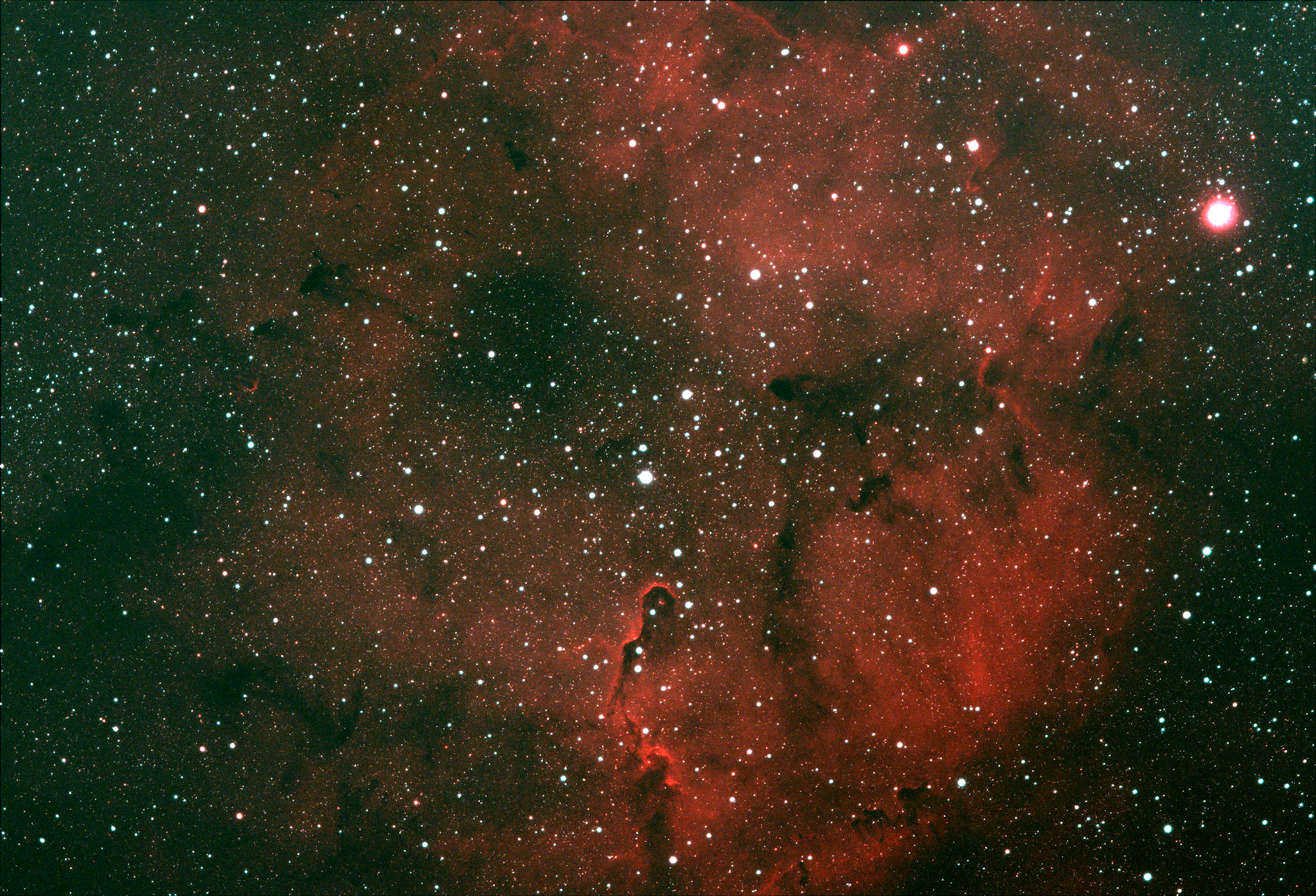
IC-1396 The Elephant's Trunk Nebula (The Misty Clove Cluster) The very bright star in the upper right is also known as Herschel's Garnet Star, which is one of the largest known stars with a radius of 1,000 times that of the Sun. If the Sun were that size, it would engulf the planet Mars, and just barely engulf Jupiter. See if you can see why they call it the Elephant's Trunk Nebula (it took me a while and is kind of small in this field of view).